Backend Engineer AI-Adjacent Roles to Pivot Into
Explore the best AI-adjacent roles for backend engineers, including ML platform, retrieval, and AI infrastructure paths with practical pivot advice.
Ian Cummings
2x Founder, Game Developer
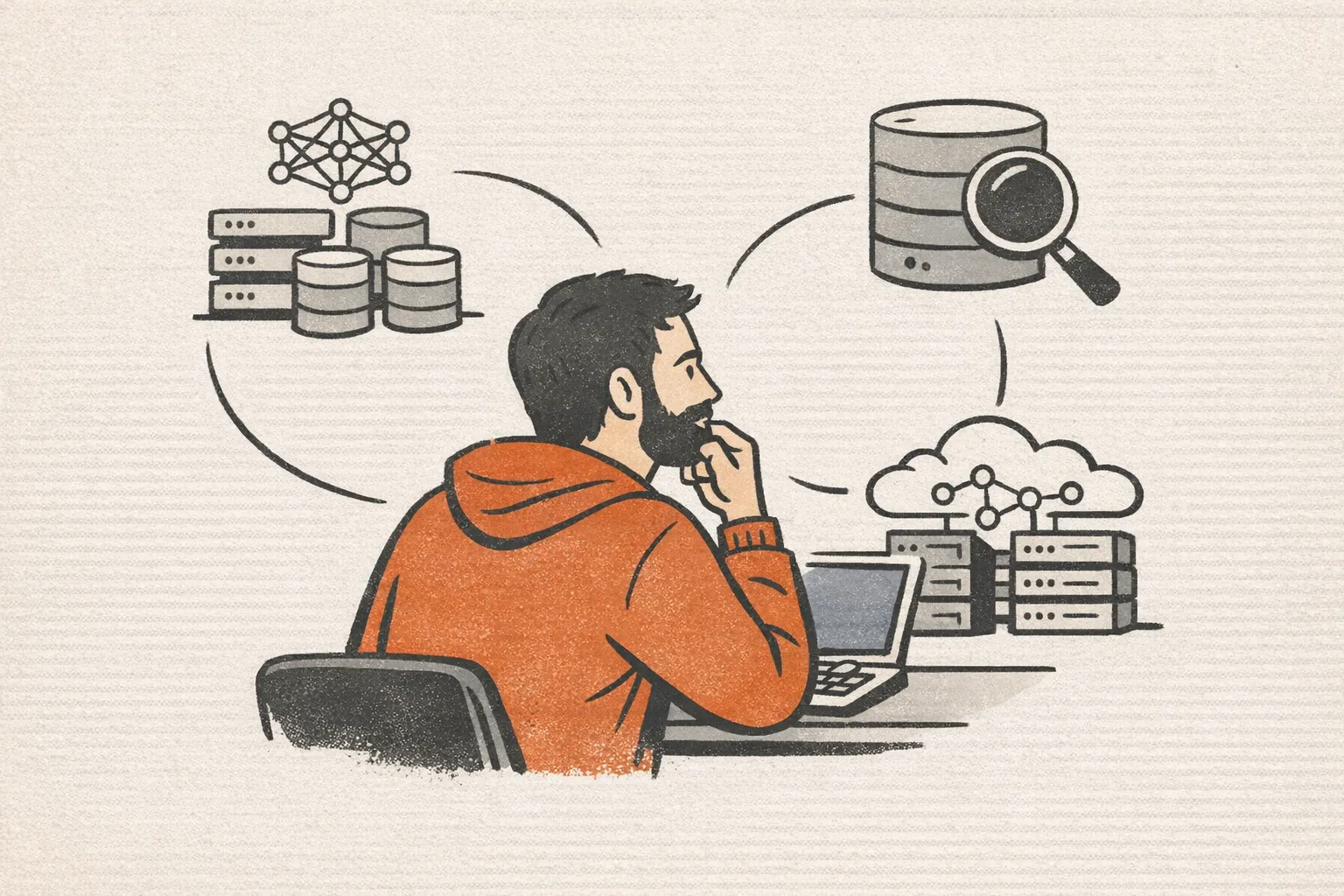
Backend Engineer AI-Adjacent Roles You Can Pivot Into
If you’re a backend engineer trying to stay close to the AI wave without becoming a machine learning researcher, you have more options than you might think.
A lot of engineers assume the only “real” AI jobs are model training, deep learning, or data science. In practice, many companies need people who can build the systems around AI products: APIs, pipelines, infrastructure, observability, security, and reliability. That’s good news if your background is in services, databases, distributed systems, or platform work.
This guide breaks down the most realistic AI-adjacent roles for backend engineers, what transfers well from your current experience, where the skill gaps usually are, and how to position yourself for interviews.
What “AI-adjacent” means for backend engineers
AI-adjacent roles sit near machine learning products without requiring you to spend all day tuning models.
These jobs often involve:
- serving models in production
- building data and event pipelines
- designing APIs for AI features
- managing vector databases and retrieval systems
- improving latency, reliability, and cost
- securing systems that handle sensitive prompts or outputs
- creating internal tooling for experimentation and evaluation
If you already know how to ship backend systems, you may be closer to these roles than you think.
1. ML platform engineer
An ML platform engineer builds the internal systems that help data scientists and ML engineers train, deploy, monitor, and manage models.
Typical work includes:
- deployment workflows
- feature stores
- model registries
- batch and streaming pipelines
- experiment tracking
- infrastructure automation
Why backend engineers fit
Backend engineers often already understand:
- service architecture
- cloud infrastructure
- CI/CD
- observability
- scaling and reliability
- access control and production operations
That foundation maps well to platform work, especially at companies where ML teams need stronger engineering discipline around production systems.
What to learn
To become credible for ML platform roles, focus on:
- the model lifecycle from training to serving
- common tooling like Airflow, Kubeflow, MLflow, or managed cloud ML platforms
- batch vs real-time inference tradeoffs
- GPU scheduling basics
- model monitoring concepts such as drift, quality, and evaluation
You do not need to become an expert in neural network theory first.
2. AI infrastructure engineer
AI infrastructure engineers focus on the systems that make AI workloads practical and affordable.
This can include:
- inference infrastructure
- container orchestration
- GPU utilization
- caching layers
- queueing systems
- throughput optimization
- cost controls
At many startups, this role is effectively “backend plus performance engineering for AI products.”
Why backend engineers fit
If you’ve worked on high-throughput APIs, asynchronous jobs, distributed systems, or cloud performance, you already have relevant experience.
Hiring managers in this area often care less about whether you can train a transformer from scratch and more about whether you can make an AI feature fast, stable, and cost-effective.
What to learn
Useful topics include:
- inference serving patterns
- token, latency, and cost tradeoffs for LLM-backed systems
- concurrency and queue design
- vector search basics
- caching strategies for AI responses
- cloud GPU pricing and deployment constraints
3. Retrieval and search engineer
Many AI products depend on retrieval, ranking, and search rather than pure generation.
A retrieval-focused engineer might work on:
- document ingestion pipelines
- embeddings workflows
- chunking strategies
- metadata filtering
- hybrid search
- ranking systems
- evaluation of retrieval quality
This is one of the most practical entry points for backend engineers because it combines familiar systems work with newer AI concepts.
Why backend engineers fit
This path rewards engineers who are strong in:
- data modeling
- indexing
- API design
- pipeline reliability
- performance tuning
- debugging production behavior
If you’ve built search, recommendation, or content-serving systems before, you may have a strong story already.
What to learn
Focus on:
- embeddings and what they are actually used for
- vector databases and approximate nearest neighbor search
- retrieval-augmented generation architectures
- offline and online evaluation
- common failure modes like poor chunking or weak metadata
4. AI product backend engineer
Some companies don’t hire for a separate “AI engineer” title at all. They hire backend engineers to add AI features into existing products.
That work may involve:
- integrating model APIs n- building orchestration layers
- storing prompts and outputs safely
- handling retries and fallbacks
- creating evaluation workflows
- instrumenting usage and quality metrics
In many cases, this is the easiest pivot because the title may still be backend engineer, but the product domain becomes AI-heavy.
Why backend engineers fit
This path is ideal if you want to stay close to application engineering while gaining AI exposure.
You can contribute through:
- robust API integration
- workflow design
- auth and permissions
- billing and rate limiting
- auditability
- production debugging
What to learn
You should understand:
- prompt orchestration patterns
- structured outputs and tool calling
- evaluation basics
- guardrails and safety concerns
- how to design around nondeterministic outputs
5. Data platform or pipeline engineer for AI teams
AI teams often struggle less with model ideas than with messy data foundations.
A data platform engineer in an AI environment may own:
- ingestion systems
- labeling pipelines
- feature pipelines
- warehouse-to-model workflows
- data quality checks
- lineage and governance
Why backend engineers fit
If you’ve built event-driven systems, ETL jobs, or internal platforms, this can be a natural move.
The overlap is especially strong for engineers who have worked with:
- Kafka
- workflow schedulers
- cloud storage systems
- warehouse integrations
- schema evolution
- reliability for batch jobs
What to learn
Build familiarity with:
- modern data stack tooling
- data contracts and quality monitoring
- training data requirements
- offline vs online data consistency
- privacy and compliance issues in AI pipelines
Which path is best for you?
A simple rule of thumb:
- If you like developer tooling and internal systems, look at ML platform roles.
- If you like performance, scaling, and infra, look at AI infrastructure roles.
- If you like search, ranking, or information systems, look at retrieval engineering.
- If you like product work, look at backend roles on AI-native teams.
- If you like pipelines and data movement, look at data platform roles.
You do not need to pick the most fashionable title. You need the path that best matches your existing strengths and gives you a believable transition story.
How to position your backend experience
The biggest mistake backend engineers make is underselling relevant experience because it doesn’t look “AI enough.”
Instead of saying:
- “I don’t have direct AI experience.”
Translate your work into adjacent value:
- “I built low-latency APIs that served high-volume requests.”
- “I designed asynchronous pipelines with strong reliability guarantees.”
- “I improved observability and incident response for production services.”
- “I reduced infrastructure cost while maintaining performance.”
- “I built internal platforms that improved developer velocity.”
Those are highly relevant outcomes in AI-adjacent teams.
What to put in a portfolio project
You do not need a giant side project. One focused project is enough if it demonstrates the right skills.
Good examples:
- a retrieval-augmented app with ingestion, chunking, embeddings, and evaluation
- an inference service with caching, queueing, and observability
- a document processing pipeline with retries, metrics, and failure handling
- an internal-style ML deployment workflow with versioning and rollback support
Your project should show engineering judgment, not just API usage.
Include:
- architecture decisions
- tradeoffs you made
- latency or cost considerations
- failure modes you handled
- how you would productionize it further
Interview prep for AI-adjacent backend roles
Expect interviews to test a mix of standard backend fundamentals and practical AI systems thinking.
Common themes:
- system design for inference or retrieval workflows
- API design for AI features
- scaling and reliability tradeoffs
- data pipeline design
- observability and debugging
- cost optimization
You may also get asked:
- When should you use batch vs real-time inference?
- How would you evaluate retrieval quality?
- What happens when model output is inconsistent?
- How would you design fallbacks if an LLM provider is slow or unavailable?
- How would you prevent sensitive data leakage?
If you want a broader reset on your transition plan, start with our guide for backend engineers exploring career pivots.
A practical 30-day pivot plan
If you want to move quickly, use this sequence:
Week 1
- pick one target role family
- read 15–20 real job descriptions
- note repeated tools, responsibilities, and keywords
Week 2
- build one small but credible project
- write down architecture and tradeoffs
- publish the code and a short walkthrough
Week 3
- rewrite your resume around transferable outcomes
- update LinkedIn headline and summary
- prepare 5 stories that connect your backend work to AI-adjacent needs
Week 4
- practice system design questions in your target area
- apply to roles with matching language
- reach out to engineers or hiring managers in those teams
Final thought
You do not need to abandon backend engineering to benefit from AI hiring demand.
In many companies, the most valuable people in AI are the ones who can turn promising demos into reliable products. If you can build systems that are scalable, observable, secure, and cost-aware, you already have a strong foundation.
The smartest pivot may not be “become an ML engineer.” It may be “bring backend depth to AI-adjacent problems that companies urgently need solved.”
Ready to find your pivot?
Take our 5-minute assessment and get a concrete action plan, tool recommendations, and a 30-day roadmap tailored to your exact situation.
Find Your Pivot