Best Adjacent Roles for Technical Artists, Designers, and QA Engineers
Where to pivot when your specialized role is under pressure.
Ryan Yousefi
Head Writer, 20 Year Sports Writer
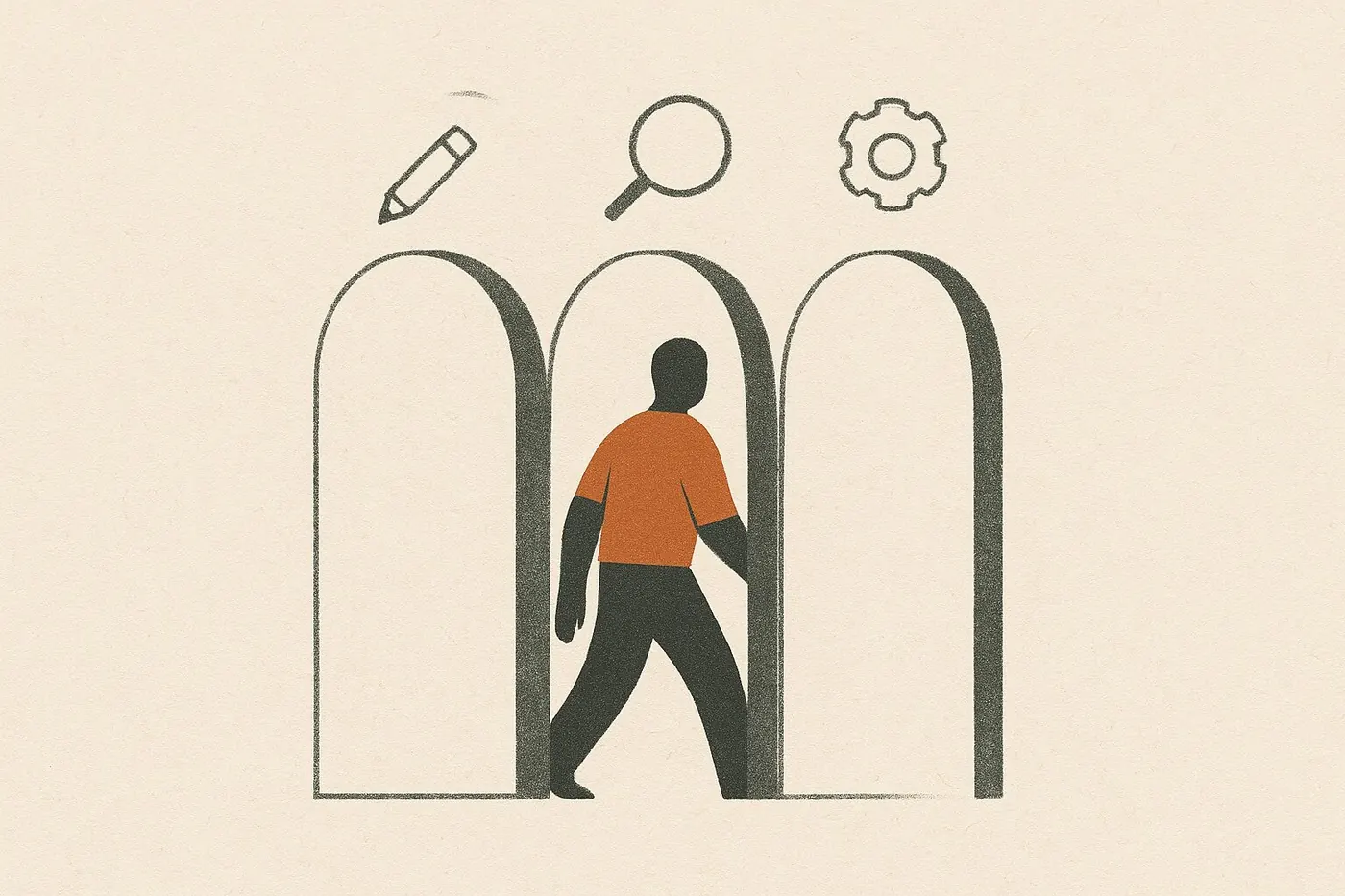
Adjacent Roles for Technical Artists, Designers, and QA Engineers
Not every career pivot requires starting from scratch. Some of the strongest moves you can make are lateral ones into roles that value the exact skills you already have but pay better, offer more stability, or open up industries beyond your current one.
Here are the highest-value adjacent roles for four common technical specializations, with honest assessments of what transfers and what you will need to learn.
Technical Artist to Pipeline/Tools Engineer
Why this works: Technical artists already live at the intersection of art and engineering. You understand both the creative workflow and the technical systems that support it. Pipeline and tools engineers need exactly this dual literacy.
What transfers directly:
- Scripting skills (Python, MEL, MaxScript, Houdini VEX)
- Understanding of DCC tools and their APIs
- Knowledge of asset pipelines, file formats, and data flow
- Experience debugging problems that span art and engineering
- The ability to talk to both artists and engineers without losing either audience
What you need to learn:
- Software engineering fundamentals if your scripting has been mostly procedural: version control workflows, testing, code review practices
- Systems design and architecture for larger tools
- Database basics for asset management systems
- Potentially a compiled language (C++, Rust, or Go) depending on the role
The opportunity: Pipeline and tools roles exist in film, games, architecture visualization, automotive design, and increasingly in AI/ML companies that need data pipeline engineers. Your domain knowledge in creative workflows makes you more valuable than a generic software engineer in these roles. Salaries typically run 20-40% higher than equivalent TA positions.
Designer to Product Manager
Why this works: Designers who understand user research, information architecture, and business context are already doing half of a PM's job. The transition is less about learning new skills and more about shifting your primary responsibility from craft execution to strategy and coordination.
What transfers directly:
- User empathy and research skills
- Ability to translate user needs into feature requirements
- Prototyping and communication through visual artifacts
- Understanding of design systems and frontend constraints
- Experience presenting and defending decisions to stakeholders
What you need to learn:
- Business metrics and how to tie product decisions to revenue, retention, and growth
- Prioritization frameworks (RICE, ICE, story mapping) and how to say no
- Technical literacy around engineering constraints, system architecture, and API design (not coding, but understanding)
- Roadmap planning and stakeholder management at the organizational level
- Data analysis: SQL basics, analytics platforms, A/B testing methodology
The opportunity: Product management pays significantly more than most design roles and has a clearer leadership trajectory. Designers who become PMs often excel because they maintain user focus in a role that can easily drift toward pure business optimization. The demand for PMs with design backgrounds is strong, particularly in product-led growth companies.
QA Engineer to SDET, Security, or Automation Engineer
Why this works: QA engineers understand systems from the breaking perspective, which is incredibly valuable. The adjacent roles here formalize and expand that skill set into more technical and higher-paying positions.
Path 1: QA to SDET (Software Development Engineer in Test)
What transfers: test planning, bug identification patterns, understanding of edge cases, existing automation experience. What to learn: deeper programming skills (Java, Python, or JavaScript), test framework architecture (not just using Selenium but building test infrastructure), CI/CD integration, and API testing at scale.
Path 2: QA to Security Engineer
What transfers: adversarial thinking (you already try to break things), understanding of system boundaries, attention to edge cases, experience with different attack surfaces. What to learn: security fundamentals (OWASP top 10, common vulnerability types), penetration testing tools and methodology, network security basics, compliance frameworks (SOC 2, ISO 27001), and security-specific certifications (CompTIA Security+, CEH, or OSCP).
Path 3: QA to Automation Engineer
What transfers: test automation experience, understanding of what to automate and what to keep manual, CI/CD familiarity. What to learn: infrastructure as code (Terraform, Ansible), containerization (Docker, Kubernetes basics), monitoring and observability tools, and scripting for operational tasks beyond testing.
The opportunity: All three paths lead to significantly higher compensation. SDETs typically earn 30-50% more than manual QA. Security engineers are in extreme demand with salaries reflecting it. Automation engineers bridge QA and DevOps, opening up a wide range of roles.
Production Manager to Technical Program Manager
Why this works: Production managers in games, film, or agencies already coordinate complex technical projects across multiple teams. Technical Program Management (TPM) is essentially the same job with a broader scope and significantly better compensation.
What transfers directly:
- Project coordination across engineering, art, and design teams
- Risk identification and mitigation
- Schedule management and dependency tracking
- Stakeholder communication and expectation management
- Understanding of software development lifecycles
- Experience shipping under pressure and handling scope changes
What you need to learn:
- Technical depth sufficient to evaluate engineering trade-offs and understand system architecture discussions
- Program-level thinking: managing multiple projects and their interdependencies
- Data-driven decision making with formal metrics (velocity, throughput, cycle time)
- Enterprise tools and methodologies (Jira at scale, SAFe or similar frameworks, OKR alignment)
- Cloud and infrastructure basics enough to understand what engineering teams are building
The opportunity: TPM roles at major tech companies (Google, Amazon, Meta) pay $150-250K+ and are perpetually understaffed. Production managers from games and film bring battle-tested coordination skills from environments that are often more chaotic and constrained than typical tech companies. That experience is a genuine competitive advantage.
General Pivot Strategy for Technical Specialists
Regardless of which specific transition you are pursuing, these principles apply:
Document transferable skills explicitly. Do not assume hiring managers will connect the dots. In your resume, portfolio, and interviews, explicitly draw the lines between what you have done and what the new role requires. "My experience optimizing game shaders translates to real-time visualization because..." is much more effective than hoping they figure it out.
Build a bridge project. Create one substantial project that demonstrates competence in the new domain while leveraging your existing expertise. A technical artist building a pipeline tool. A designer running a product experiment. A QA engineer creating a security testing framework. These hybrid projects are evidence that you can operate in the new role.
Find internal transition opportunities first. If your current company has roles in your target area, internal transitions are often easier than external ones. You already have credibility, and hiring managers can talk to people who have worked with you.
Network in the target community. Join Slack groups, attend meetups, and participate in discussions where people in your target role gather. Learn the vocabulary, understand the current challenges, and build relationships before you need to ask for referrals.
Reframe, do not apologize. Your non-traditional background is an asset, not a liability. Companies benefit from diverse perspectives. A PM with design background brings user empathy. An SDET with QA roots brings testing intuition. Lead with what you bring, not what you lack.
Making the Pivot
Every transition on this list is achievable within 3-6 months of focused skill-building alongside your current role or job search. The key is to start building evidence of the new skill set before you need it: side projects, open-source contributions, certifications where relevant, and portfolio pieces that demonstrate capability in the target role.
Do not wait until you are "ready" to start. You will never feel ready. Start building toward the adjacent role now, and let the learning happen through doing.
If you are not sure which adjacent role fits your specific background and goals, take our assessment to get a personalized recommendation based on your current skills, experience, and what you actually want from your next role. The assessment identifies not just what you can do, but what you would actually enjoy and where your skills have the highest market value.
The best career pivots do not waste what you have already built. They leverage it. Every specialized skill you have developed, every challenge you have navigated, every domain you understand deeply: these are assets. The question is which new role lets you deploy them most effectively.
Ready to find your pivot?
Take our 5-minute assessment and get a concrete action plan, tool recommendations, and a 30-day roadmap tailored to your exact situation.
Find Your Pivot