Designers Pivot Guide 2026: Best Career Paths to Target
A practical 2026 pivot guide for designers covering the best adjacent career paths, skills to build, and role titles to target next.
Ian Cummings
2x Founder, Game Developer
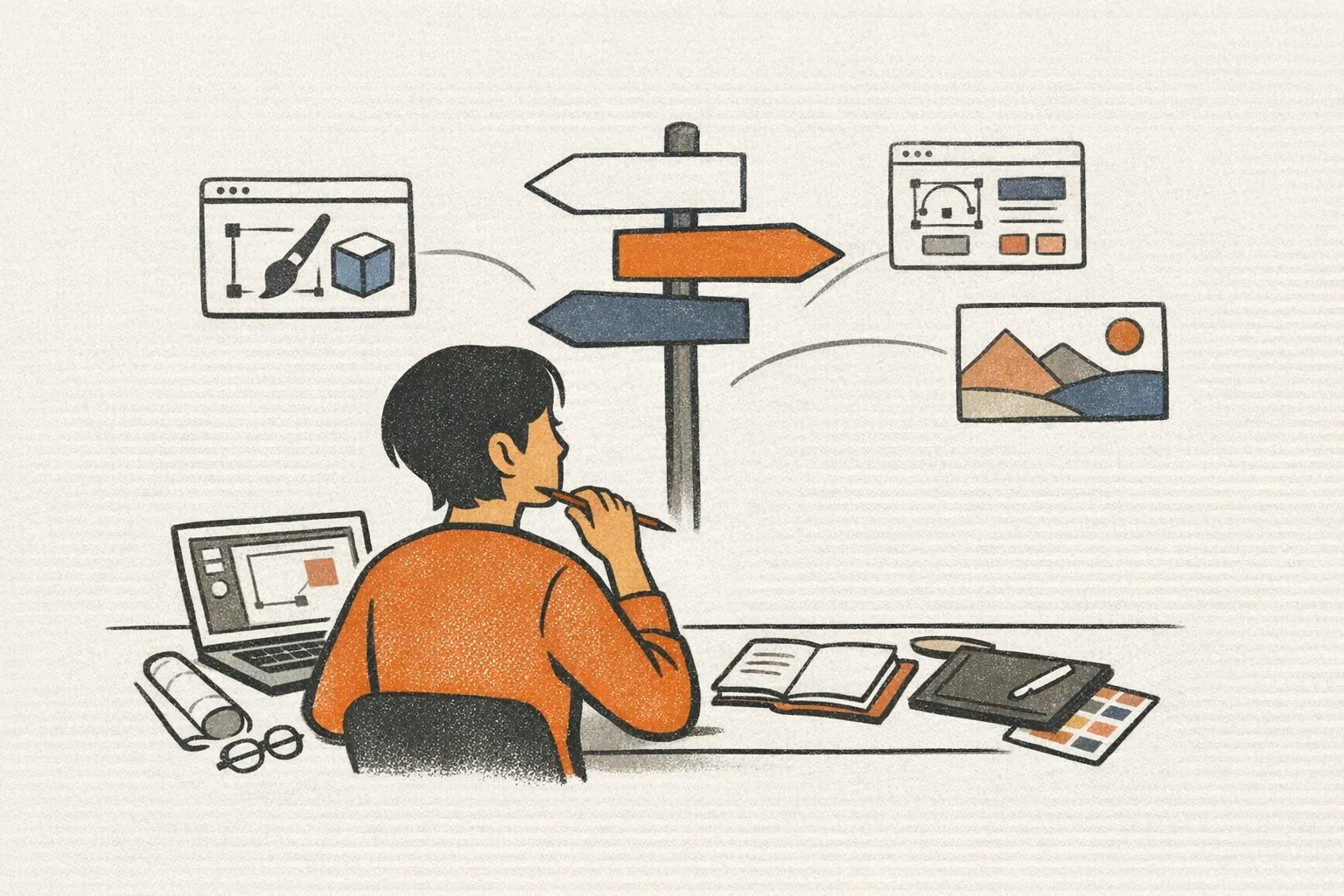
Designers Pivot Guide 2026
If you’re a designer wondering what comes next, you’re not alone. Hiring has changed, product teams are leaner, and many design roles now expect broader business, research, content, or systems thinking than they did a few years ago.
The good news: designers are unusually well positioned to pivot. You already know how to understand users, simplify complexity, communicate visually, and make ambiguous problems concrete. Those skills transfer into a wide range of adjacent roles.
This guide breaks down the most practical pivot paths for designers in 2026, the skills worth building, and the job titles most likely to match your background.
Why designers are well suited to pivot
A lot of people underestimate how portable design skills are. Even if your title has been product designer, UX designer, visual designer, or brand designer, you’ve probably built strengths that matter in many other functions:
- user empathy and qualitative research
- structured problem solving
- systems thinking
- stakeholder communication
- storytelling and presentation
- prioritization under constraints
- comfort with iteration and feedback
Those are not niche skills. They show up in product, research, operations, marketing, enablement, customer experience, and strategy roles.
The challenge is usually not whether you can pivot. It’s whether you can translate your experience into language hiring managers understand.
The best pivot paths for designers in 2026
Not every pivot is equally realistic. The strongest options usually sit one step away from your current work, where your existing experience still feels relevant.
Here are the most practical paths.
1. Product manager
This is one of the most common pivots for product and UX designers.
Why it fits:
- you already work cross-functionally
- you likely understand user problems deeply
- you’ve probably influenced roadmap decisions informally
- you know how product decisions affect usability and adoption
What changes in the role:
- more ownership of prioritization and tradeoffs
- more writing, alignment, and decision-making
- less time in execution details of interface design
- more accountability for outcomes, not just experience quality
Skills to build:
- writing product requirements and decision docs
- roadmap prioritization
- metrics and experimentation basics
- stakeholder management
- business model understanding
Good target titles:
- Associate Product Manager
- Product Manager
- Growth Product Manager
- Platform Product Manager
- Product Operations Manager
Best for designers who:
- enjoy shaping what gets built, not just how it looks
- like tradeoff decisions
- are comfortable leading without formal authority
2. UX researcher or mixed-methods researcher
If your favorite part of design work is understanding users, this can be a strong pivot.
Why it fits:
- many designers already conduct interviews, usability tests, and synthesis
- your portfolio may already include research artifacts
- you know how insights connect to product decisions
What changes in the role:
- deeper rigor in study design and analysis
- less ownership of final interface decisions
- more emphasis on evidence quality and research operations
Skills to build:
- research planning and methodology selection
- interview moderation
- survey design
- synthesis frameworks
- communicating findings to executives and product teams
Good target titles:
- UX Researcher
- Product Researcher
- Design Researcher
- User Researcher
- Research Operations Specialist
Best for designers who:
- love interviews and synthesis
- prefer insight generation over visual execution
- enjoy pattern finding and evidence-based recommendations
3. Design systems specialist
For designers who enjoy consistency, scale, and collaboration with engineering, design systems can be a durable specialization or pivot.
Why it fits:
- it builds on existing UI and interaction design experience
- it rewards systems thinking
- it often creates strong collaboration with frontend teams
What changes in the role:
- more focus on standards, governance, and documentation
- more work on tokens, components, accessibility, and adoption
- less emphasis on greenfield feature design
Skills to build:
- component thinking
- accessibility standards
- documentation and governance
- collaboration with engineers
- familiarity with design-to-code workflows
Good target titles:
- Design Systems Designer
- Senior Product Designer, Design Systems
- UI Systems Designer
- Design Technologist
- Design Operations Manager
Best for designers who:
- like structure and consistency
- enjoy scaling quality across teams
- are comfortable working in detail-heavy environments
4. UX writer or content designer
This is a strong path for designers with a talent for clarity, flows, and user guidance.
Why it fits:
- designers already think about user intent and friction
- many have written interface copy, onboarding text, or empty states
- content design is deeply tied to product experience
What changes in the role:
- more emphasis on language systems and content strategy
- less ownership of layout and visual hierarchy
- more collaboration with legal, support, and brand teams
Skills to build:
- microcopy and content patterns
- information architecture
- voice and tone systems
- content testing
- accessibility in language
Good target titles:
- Content Designer
- UX Writer
- Product Content Strategist
- Conversation Designer
- Information Architect
Best for designers who:
- care deeply about clarity
- enjoy naming, flows, and reducing confusion
- have strong writing instincts
5. Customer experience or service design
If you think beyond screens and care about the full journey, this can be an excellent pivot.
Why it fits:
- service design uses many core design methods
- journey mapping and systems thinking transfer well
- organizations increasingly need people who can improve end-to-end experiences
What changes in the role:
- broader scope across channels and teams
- more operational and process-oriented work
- more influence through facilitation and alignment
Skills to build:
- service blueprinting
- journey mapping at organizational scale
- workshop facilitation
- process design
- change management basics
Good target titles:
- Service Designer
- Customer Experience Designer
- CX Strategist
- Journey Manager
- Experience Operations Manager
Best for designers who:
- think holistically
- enjoy mapping messy systems
- want impact beyond product UI
6. Product marketing manager
This is a less obvious but increasingly viable path, especially for designers with strong storytelling and positioning instincts.
Why it fits:
- designers often understand users, messaging, and product value
- portfolio work can demonstrate launch thinking and narrative clarity
- visual communication is a major advantage
What changes in the role:
- more market, competitor, and positioning work
- more writing and go-to-market planning
- less direct ownership of product experience details
Skills to build:
- positioning and messaging
- launch planning
- customer segmentation
- competitive analysis
- sales enablement basics
Good target titles:
- Product Marketing Manager
- Go-to-Market Manager
- Customer Marketing Manager
- Brand Strategist
- Solutions Marketing Manager
Best for designers who:
- enjoy storytelling and framing
- think commercially
- like connecting product decisions to adoption and growth
7. Frontend-adjacent design technologist roles
Some designers want to stay close to product creation but move toward implementation.
Why it fits:
- many product designers already work closely with components and interaction logic
- prototyping experience can translate into code-adjacent work
- teams value people who bridge design and engineering
What changes in the role:
- more technical depth
- more implementation constraints
- more direct contribution to shipped UI systems
Skills to build:
- HTML, CSS, and basic JavaScript or TypeScript
- component-based thinking
- accessibility implementation
- prototyping in code
- design system tooling
Good target titles:
- Design Technologist
- UX Engineer
- Frontend Designer
- Prototyping Engineer
- Creative Technologist
Best for designers who:
- enjoy tools and implementation
- want to stay close to interface work
- like bridging disciplines
How to choose the right pivot path
A good pivot is not just about what is available. It should also fit your energy, strengths, and working style.
Ask yourself:
- Which parts of my current role give me energy?
- Do I want more strategy, more research, more writing, or more technical depth?
- Do I want to own decisions, influence decisions, or specialize deeply?
- What evidence do I already have that I can do adjacent work?
- Which pivot requires the smallest credibility gap?
In most cases, the best next move is not a dramatic reinvention. It’s a role where 60 to 80 percent of your current experience still applies, and the remaining gap can be closed with focused projects.
Skills designers should build before pivoting
You do not need to become an expert in everything. But you do need enough signal that a hiring manager can believe the pivot is real.
The most useful skill buckets are:
1. Business fluency
Many designers get filtered out from adjacent roles because they describe work only in design terms.
Build comfort with:
- revenue and growth language
- retention and activation concepts
- prioritization frameworks
- tradeoff discussions
- how teams measure success
2. Clear written communication
Strong writing helps in almost every pivot path.
Practice:
- concise project summaries
- decision memos
- research readouts
- launch briefs
- portfolio case studies with business context
3. Evidence of adjacent ownership
Hiring managers want proof, not just interest.
Examples:
- a designer who led roadmap shaping can signal PM potential
- a designer who ran studies and synthesis can signal research potential
- a designer who built content patterns can signal content design potential
- a designer who maintained components can signal systems potential
4. Tool and workflow literacy
The exact tools matter less than showing you can operate in the target function.
That might mean:
- analytics basics for PM or marketing
- research repositories for UX research
- content systems for content design
- component libraries for design systems
- code basics for design technologist roles
Role titles designers should target in 2026
One of the biggest mistakes career pivoters make is searching only for the obvious title.
Instead of applying only to “Product Manager” or “UX Researcher,” search a wider title set. Companies often use different labels for similar work.
Here are useful title clusters.
Product and strategy titles
- Associate Product Manager
- Product Manager
- Product Operations Manager
- Growth Product Manager
- Platform Product Manager
- Innovation Manager
Research and insight titles
- UX Researcher
- Product Researcher
- Design Researcher
- User Researcher
- Research Operations Specialist
- Customer Insights Manager
Content and information titles
- Content Designer
- UX Writer
- Product Content Strategist
- Information Architect
- Conversation Designer
Systems and implementation titles
- Design Systems Designer
- Design Technologist
- UX Engineer
- Creative Technologist
- Frontend Designer
Experience and operations titles
- Service Designer
- Customer Experience Designer
- Journey Manager
- Experience Operations Manager
- Design Operations Manager
Marketing and positioning titles
- Product Marketing Manager
- Go-to-Market Manager
- Brand Strategist
- Customer Marketing Manager
- Solutions Marketing Manager
How to reposition your portfolio for a pivot
Your portfolio should not read like a museum of screens. It should make the target role feel like a logical next step.
A few practical changes help:
- lead with problem framing, not visuals
- explain your decisions and tradeoffs
- show collaboration across functions
- include outcomes when you have them
- highlight adjacent responsibilities you already owned
For example, if you want to pivot into product management, emphasize prioritization, stakeholder alignment, and decision-making. If you want to pivot into research, emphasize methodology, synthesis, and how insights changed the roadmap.
How to talk about your pivot in interviews
A strong pivot story is simple:
- what you’ve done
- what you discovered you’re strongest at
- why the target role is the natural next step
- what proof you already have
A weak pivot story sounds like escape. A strong one sounds like progression.
For example:
- “In product design roles, I found that my strongest contributions were in shaping problem definition and prioritization with cross-functional partners. That pushed me toward product management, where I can own those decisions more directly.”
- “The part of design work I consistently gravitated toward was user interviews, synthesis, and turning findings into product direction. That’s why I’m targeting UX research roles.”
Common mistakes designers make when pivoting
A few patterns show up again and again:
- targeting roles that are too far from current evidence
- rewriting the resume without changing the portfolio story
- using design-heavy language for non-design hiring managers
- applying to only one exact title
- underestimating the importance of writing and business context
- trying to look senior in a new function without enough proof
The best pivots usually look credible, not dramatic.
A practical 30-day pivot plan for designers
If you want momentum quickly, keep it simple.
Week 1: pick one path
Choose one primary direction, not three.
- PM
- UX research
- content design
- design systems
- service design
- product marketing
- design technologist
Week 2: gather proof
List projects where you already did adjacent work.
For each project, write:
- the problem
- your role
- the adjacent responsibilities you owned
- the outcome
Week 3: rewrite your materials
Update:
- resume headline
- summary section
- portfolio case study intros
- LinkedIn headline
- target title list for search
Week 4: test the market
Apply to a focused set of roles and track response quality.
If interviews are weak, the issue is usually one of three things:
- wrong target role
- weak evidence framing
- unclear pivot narrative
Final thought
Designers often assume pivoting means starting over. Usually it doesn’t. The strongest pivots build on the parts of design work you already do well and move you closer to the kind of problems you actually want to own.
In 2026, the most resilient career moves for designers are practical, adjacent, and evidence-based. Pick the path that matches your strengths, translate your experience clearly, and make the next role feel like a natural continuation of the work you’ve already been doing.
Ready to find your pivot?
Take our 5-minute assessment and get a concrete action plan, tool recommendations, and a 30-day roadmap tailored to your exact situation.
Find Your Pivot