Game Developer Freelance Transition Guide
How game developers can transition into freelance work by packaging Unity, Unreal, simulation, and technical art skills into services clients buy.
Ian Cummings
2x Founder, Game Developer
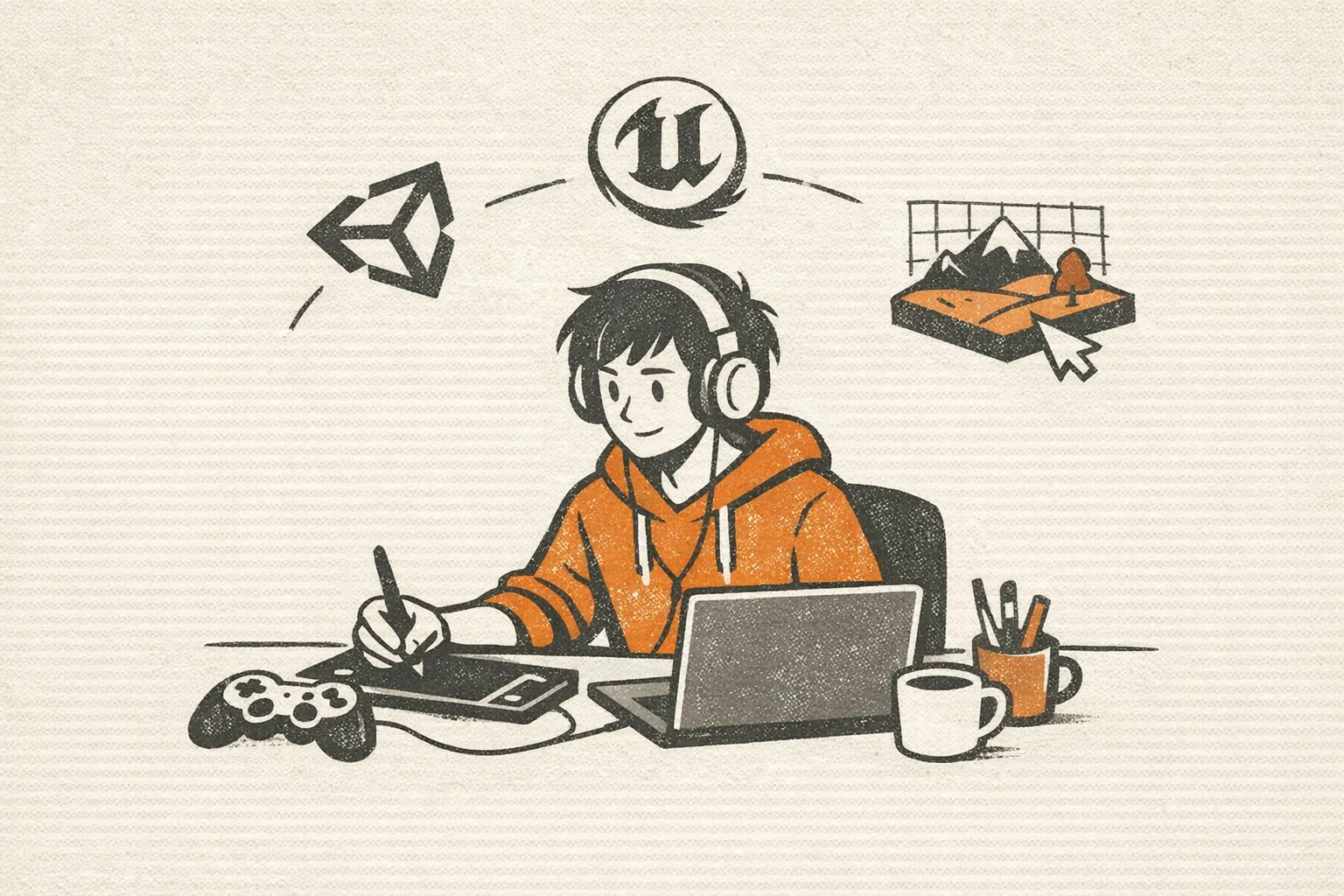
Game Developer Freelance Transition Guide
A lot of game developers eventually ask the same question: can I turn my skills into freelance income without starting over?
The short answer is yes — but usually not by pitching yourself as a generic “game dev for hire.” The strongest freelance transitions happen when you repackage game development skills into services that businesses already understand, budget for, and search for.
If you are exploring a broader career pivot, start with the game developers pivot page. If you specifically want more control over your schedule, clients, and income mix, freelancing can be a practical bridge.
Why freelancing is tricky for game developers
Game development builds a valuable mix of technical and creative skills:
- real-time programming
- performance optimization
- graphics and tooling work
- gameplay systems design
- cross-functional collaboration
- rapid prototyping
- debugging under tight constraints
The problem is that many freelance buyers are not looking for “gameplay programmer” or “technical game designer.” They are looking for outcomes like:
- interactive product demos
- Unity or Unreal prototypes
- 3D web experiences
- simulation tools
- AR or VR proofs of concept
- technical art pipelines
- developer tools
That means the transition is less about learning entirely new skills and more about translating your experience into offers that make sense outside traditional game studios.
The best freelance services for former or current game developers
Not every game dev background maps equally well to freelance work. These are usually the most realistic service lines.
1. Unity or Unreal prototyping
Many startups, agencies, and enterprise teams need quick prototypes but do not want to hire full-time engine specialists.
You can offer:
- gameplay or interaction prototypes
- internal demos for fundraising or sales
- VR training simulations
- proof-of-concept mechanics
- tool integrations inside Unity or Unreal
This works especially well if you can show short videos, playable builds, or before-and-after examples.
2. Interactive 3D experiences for brands and agencies
A lot of non-gaming clients want immersive experiences but do not know how to build them.
Examples include:
- product visualizations
- event activations
- museum or exhibit interactives
- educational simulations
- branded mini-experiences
Game developers often have an advantage here because they already know how to optimize scenes, manage assets, and build responsive interactions.
3. Technical art and pipeline support
If your background includes shaders, asset workflows, build pipelines, or engine tooling, you may be able to freelance as a specialist rather than a generalist.
Clients may need help with:
- import and export pipelines
- performance cleanup
- shader implementation
- build automation
- editor tooling
- asset optimization
This kind of work can be less crowded than general software freelancing because it requires niche experience.
4. Simulation and training applications
One of the most practical adjacent markets for game developers is simulation.
Industries like healthcare, manufacturing, defense, education, and industrial training often need:
- scenario-based simulations
- VR training modules
- interactive learning tools
- digital twins or visual mockups
These buyers may never search for “game developer,” but they do search for teams or freelancers who can build realistic interactive systems.
5. Contract gameplay or tools engineering
Some freelance work still comes from the games industry itself.
Studios may hire contractors for:
- feature implementation
- live ops support
- porting help
- tools development
- optimization passes
- bug fixing near milestones
This path is often the easiest first freelance step because your portfolio already matches the buyer’s expectations.
What clients actually want to see in your portfolio
A freelance portfolio is different from a studio hiring portfolio.
For full-time roles, employers may care about your specialization, team fit, and long-term growth. Freelance clients usually want confidence that you can solve a specific problem quickly and professionally.
Your portfolio should make these points obvious:
- what service you offer
- what type of client you help
- what tools or engines you use
- what the deliverable looks like
- how long projects typically take
- how to contact you
Strong portfolio pieces for freelance transition:
- a Unity prototype for a training scenario
- a short Unreal walkthrough for a real estate or product demo
- an optimized VR interaction sample
- a custom editor tool that sped up content production
- a simulation or educational interactive with clear business context
If your current portfolio is still aimed at studio recruiting, it may help to reposition it around outcomes and use cases. That is different from general portfolio and interview prep for game developers, which is more focused on landing roles than winning clients.
How to package your experience so buyers understand it
One of the biggest mistakes game developers make is describing themselves too broadly.
“Gameplay programmer with 6 years of experience in C# and Unity” is accurate, but it is not a strong freelance pitch.
A better positioning statement sounds more like:
- I build Unity prototypes for startups that need interactive demos.
- I help teams turn 3D concepts into VR training simulations.
- I create custom tools and optimization workflows for Unity production teams.
- I build interactive product experiences using real-time 3D pipelines.
The goal is to connect your background to a business problem.
Where to find early freelance work
The first projects are usually the hardest. Most game developers do not get traction by posting a generic profile and waiting.
More realistic channels include:
- former coworkers and studio contacts
- indie teams needing short-term support
- agencies that occasionally need Unity or Unreal specialists
- startup founders building demos for fundraising
- simulation or training companies
- niche communities around XR, Unity, Unreal, and technical art
You can also reach out directly with a simple offer and a relevant sample.
For example:
- a Unity prototype package for early-stage startups
- a VR training demo for industrial education companies
- a technical art cleanup sprint for teams with performance issues
Specific outreach usually works better than “available for freelance work.”
Pricing: project-based usually beats hourly at first
Many new freelancers default to hourly pricing because it feels safer. But for game developers, project-based pricing is often easier to sell when the deliverable is clear.
Examples:
- prototype sprint
- optimization audit
- custom tool build
- interactive demo package
- VR proof of concept
Project pricing helps clients understand scope and helps you avoid being compared directly to generic hourly developers.
If you are unsure what to charge, start by estimating:
- time required
- revision risk
- communication overhead
- deployment or support expectations
- urgency
Then package the work around a concrete outcome.
Skills you may need to add for a smoother transition
You probably do not need a total reskill. But a few additions can make freelancing much easier:
- clearer written communication
- lightweight scoping and proposal writing
- basic client management
- simple landing-page style portfolio copy
- familiarity with adjacent buyer needs outside games
Depending on your target niche, it may also help to learn:
- WebGL or web-based 3D delivery
- AR/VR deployment workflows
- product demo storytelling
- analytics or instrumentation basics for interactive experiences
The key is to add just enough business-facing skill to make your technical work easier to buy.
When freelancing is a good pivot — and when it is not
Freelancing can be a strong move if you want:
- more autonomy
- a bridge out of unstable studio work
- multiple income streams
- a path into adjacent industries
- faster feedback on what the market values
It may be a weaker fit if you strongly prefer:
- highly structured teams
- stable salary and benefits
- long production cycles with one product
- minimal sales or client communication
In that case, a better next step may be targeting adjacent full-time roles first, then freelancing later once your positioning is clearer.
A practical first step this week
If you are serious about a freelance transition, do not start by redesigning your whole career story.
Start with one offer.
Pick a service that fits your strongest existing skill, then create:
- a one-sentence positioning statement
- one relevant sample project
- a short list of target client types
- a simple outreach message
That is usually enough to test whether your game development experience can convert into freelance demand.
If you want to compare freelancing with other pivot paths, take the assessment on the site and review the options for game developers. The best move is not always leaving games entirely — sometimes it is packaging the same core skills in a way the market understands better.
Ready to find your pivot?
Take our 5-minute assessment and get a concrete action plan, tool recommendations, and a 30-day roadmap tailored to your exact situation.
Find Your Pivot