Game Developer Portfolio for Tech Jobs in 2026
How game developers can reshape portfolios for adjacent tech roles, with project selection, case study structure, and interview framing tips.
Ian Cummings
2x Founder, Game Developer
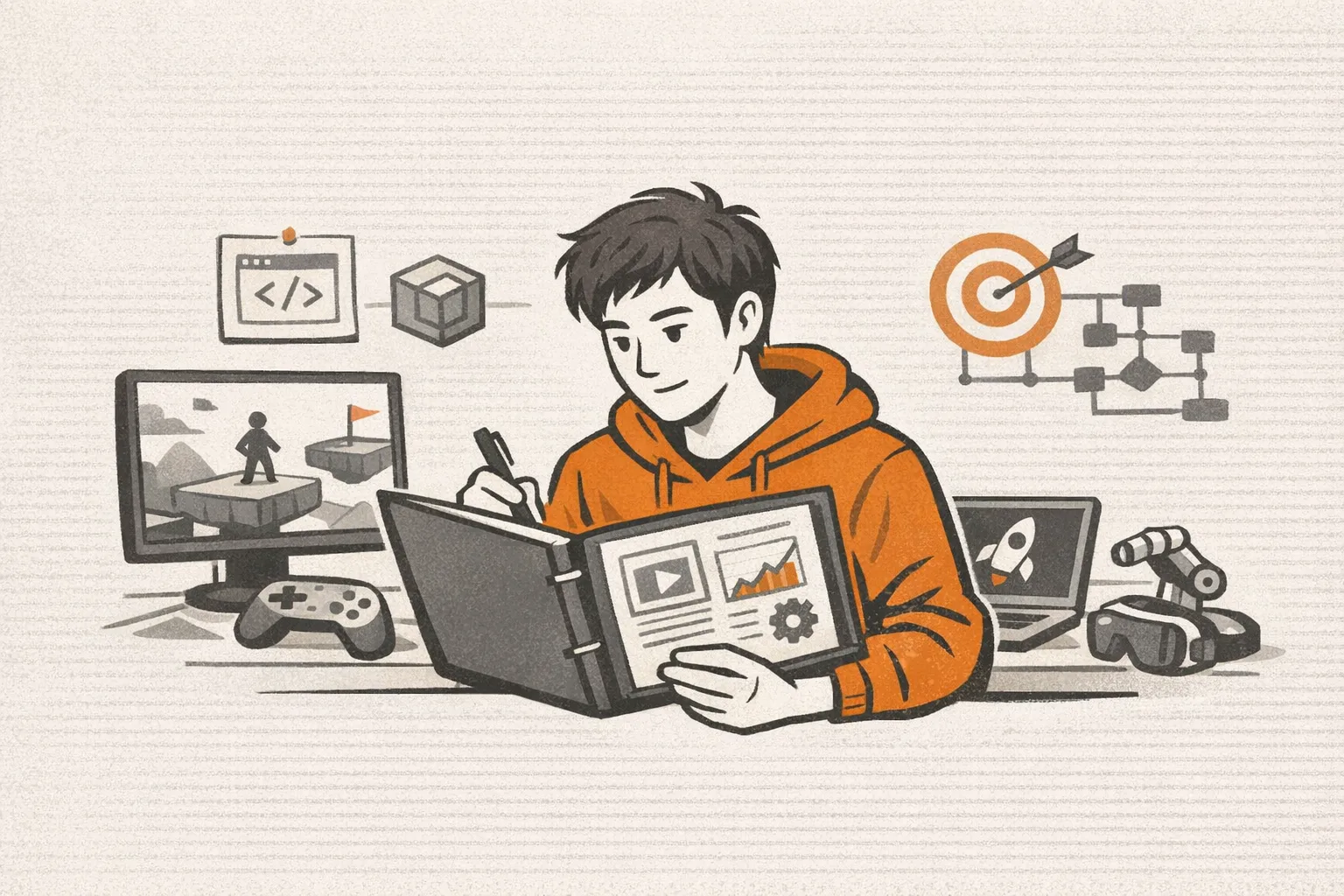
Game developer portfolio for tech jobs in 2026
If you're a game developer trying to move into a more stable or better-paying role, your portfolio is usually the first thing that needs to change.
A game portfolio is often built to impress other game developers. A hiring manager in SaaS, developer tools, simulation, edtech, or product engineering is looking for something else: evidence that you can solve business problems, work with production constraints, and communicate clearly.
That doesn't mean you need to start over. It means you need to reframe what you've already done.
What adjacent employers actually want to see
Most adjacent employers are not asking whether you shipped the prettiest shader or built the most complex gameplay loop. They want proof that you can:
- own technical work from idea to delivery
- collaborate with designers, artists, PMs, or stakeholders
- improve performance, reliability, or user experience
- work inside an existing codebase
- make tradeoffs under deadlines
- explain your decisions in plain language
Game developers often already have this experience. The problem is that it's buried under game-specific language.
For example:
- “Built enemy AI behavior trees” can become “designed and implemented state-driven systems for complex runtime decision-making”
- “Optimized frame time in combat scenes” can become “profiled and improved performance bottlenecks in a real-time interactive application”
- “Worked with level design and art” can become “collaborated cross-functionally to ship user-facing features under production deadlines”
The best portfolio projects to feature
If you're pivoting out of games, your portfolio should not be a random collection of everything you've ever made. It should be a small set of projects that support the story you want employers to believe.
A strong transition portfolio usually includes 2 to 4 projects across these buckets:
1. One polished shipped game or game system
Keep one strong game-related project because it proves depth. But write it for an outsider.
Focus on:
- the problem
- your role
- the technical constraints
- the measurable outcome
- what you would improve next
Avoid assuming the reader knows your engine, genre, or studio context.
2. One adjacent project that looks like the target job
This is the most important piece for many pivots.
If you're targeting backend or platform roles, build something with APIs, data flow, auth, logging, or deployment.
If you're targeting frontend or product engineering roles, build something with a clean UI, state management, forms, and analytics.
If you're targeting simulation, graphics tooling, or technical product roles, show systems thinking, performance awareness, and documentation.
The goal is simple: reduce the hiring manager's imagination gap.
What to put in each portfolio case study
Each project page should answer the same questions quickly.
Use this structure:
Context
What was the project? Who was it for? What constraints mattered?
Problem
What specific challenge were you solving?
Approach
What did you build? Why did you choose that approach over alternatives?
Tradeoffs
What did you optimize for? What did you intentionally not do?
Outcome
What changed because of your work?
Reflection
What did you learn, and what would you do differently now?
This structure works because it shows engineering judgment, not just output.
Common portfolio mistakes game developers make
A lot of smart candidates undersell themselves during a pivot. Usually it happens in one of these ways.
Mistake 1: Leading with visuals instead of decisions
Visual polish can help, but adjacent employers are usually hiring for problem-solving. If your portfolio is mostly screenshots and trailers, add written breakdowns.
Mistake 2: Using too much game-specific jargon
Terms that are obvious inside games may not translate outside them. Rewrite for a technical generalist.
Mistake 3: Hiding team context
Some developers try to make every project sound fully solo. That's not necessary. It's better to be precise about your contribution inside a team.
Mistake 4: Showing only hobby experiments
Small prototypes are fine, but if every project looks unfinished, employers may worry about execution. Include at least one example of sustained work with constraints.
Mistake 5: Not matching the portfolio to the role
A portfolio for gameplay engineering is not the same as a portfolio for product engineering or solutions engineering. Tailor the order and framing to the role you want now.
How to talk about game experience in interviews
Your portfolio gets you into the conversation. Your interview story closes the gap.
When interviewers ask about your background, don't apologize for coming from games. Translate it.
A simple structure:
- what you worked on
- what complexity you handled
- what constraints made it hard
- what skills transfer directly
- why you're targeting this new category now
For example:
“I spent the last few years building real-time interactive systems in game development, with a lot of focus on performance, debugging, and cross-functional delivery. What I'm looking for now is to apply that engineering foundation in a domain with broader hiring demand and clearer long-term growth.”
That sounds much stronger than “I couldn't find enough game jobs.”
Which adjacent roles fit this portfolio strategy best
This approach works especially well if you're exploring:
- product engineering
- frontend engineering
- backend engineering
- developer tools
- simulation or visualization roles
- technical artist or tools roles
- QA automation or test infrastructure
- solutions engineering for technical products
If you're still deciding where to aim, start with roles that preserve the parts of game development you actually enjoy: systems thinking, iteration, performance, tooling, or collaboration.
A practical 2-week portfolio reset plan
You do not need a 6-month reinvention project.
A realistic reset looks like this:
Week 1
- choose 2 to 3 projects to feature
- rewrite each project in plain-language case-study format
- remove weak or irrelevant older work
- update your homepage headline for the target role
Week 2
- build or polish one adjacent sample project
- add README-style documentation and screenshots
- ask 2 to 3 people outside games to review clarity
- revise your resume so it matches the portfolio story
The key is coherence. Your resume, LinkedIn, portfolio, and interview answers should all point to the same next step.
Final thought
You do not need to erase your game development background to pivot successfully. You need to package it so other employers can understand its value quickly.
A good portfolio does that translation work for them.
If you're exploring a broader transition plan beyond portfolio updates, start with the game developers pivot guide.
Ready to find your pivot?
Take our 5-minute assessment and get a concrete action plan, tool recommendations, and a 30-day roadmap tailored to your exact situation.
Find Your Pivot