How Software Engineers Can Pivot Into Freelance Work
A practical guide for software engineers exploring freelance development, from choosing a niche to finding first clients and pricing projects.
Ian Cummings
2x Founder, Game Developer
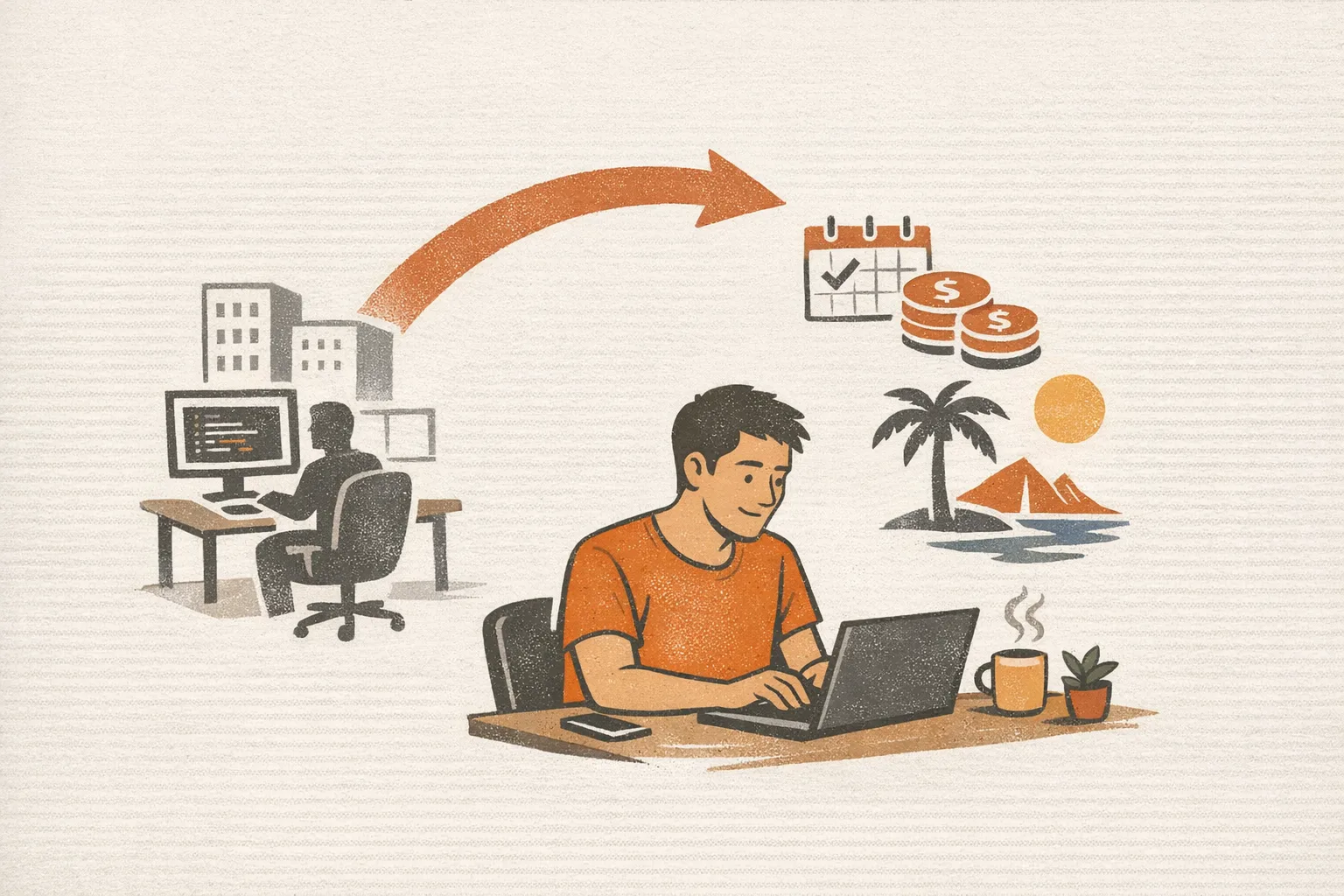
How to Go From Software Engineer to Freelance Developer
A lot of software engineers think freelancing is only for senior developers with huge networks. That is not true.
If you already ship production code, communicate with teammates, and break down messy problems, you already have the core skills clients pay for. The hard part is not learning how to code. The hard part is packaging your experience in a way that makes a business owner feel safe hiring you.
Freelancing is not the right move for everyone. But if you want more control over your schedule, a faster path to independent income, or a bridge between full-time roles, it can be a realistic pivot.
If you are still exploring broader career options, start with our software engineers pivot guide.
Why software engineers are well positioned to freelance
Most clients are not buying elegant architecture diagrams. They are buying outcomes.
They want someone who can:
- fix a broken checkout flow
- build an internal dashboard
- improve site speed
- connect APIs
- automate repetitive work
- maintain a neglected codebase
Software engineers already know how to work through ambiguity, estimate effort, and deliver under constraints. Those skills transfer directly to freelance work.
The gap is usually in three areas:
- choosing a narrow service offer
- proving credibility quickly
- finding the first few clients
Pick a service, not a job title
One of the biggest mistakes new freelancers make is describing themselves too broadly.
“Full-stack software engineer” sounds flexible, but it does not help a client understand what you actually solve. A better approach is to define a service around a painful business problem.
Examples:
- I help SaaS startups build customer-facing dashboards in React and TypeScript.
- I help small ecommerce brands fix conversion-killing performance issues.
- I help operations teams replace spreadsheet workflows with internal tools.
- I help founders launch MVPs without hiring a full in-house engineering team.
A focused offer makes it easier to:
- write a clear portfolio
- explain your value in one sentence
- get referrals
- charge based on outcomes instead of generic hourly labor
Start with the work you already know
You do not need to invent a brand-new niche.
Look at your last two or three roles and ask:
- What kinds of systems did I build repeatedly?
- Which stakeholders trusted me most?
- What problems did I solve faster than other people?
- What business context do I already understand?
For example, if you spent years building internal tools, that can become a freelance offer. If you worked on developer tooling, B2B SaaS, healthcare workflows, or ecommerce integrations, those are all useful market contexts.
Clients often prefer someone who understands their environment over someone with a longer list of programming languages.
Build a portfolio around outcomes
A freelance portfolio should not read like a resume.
A resume is optimized for recruiters and hiring managers. A freelance portfolio should help a buyer answer three questions:
- Have you solved a similar problem before?
- Can you communicate clearly?
- Do you seem low-risk to hire?
That means each project example should include:
- the problem
- your role
- the technical approach
- the result
- any constraints or tradeoffs
Even if your past work is under NDA, you can still describe the shape of the problem and your contribution in plain language.
Instead of this:
- Built microservices in Node.js and AWS
Try this:
- Rebuilt a slow reporting workflow for a B2B platform, reducing report generation time and cutting manual support requests.
Specificity matters more than buzzwords.
You do not need a huge audience to get your first client
Many engineers delay freelancing because they think they need a personal brand first.
You do not need thousands of followers. You need a small number of people who understand what you do.
Good early client sources include:
- former coworkers
- startup founders in your network
- product managers who changed companies
- agency partners who need overflow help
- local businesses with outdated systems
- niche communities where technical problems come up often
A simple outreach message works better than a vague announcement.
For example:
- I’m taking on a few freelance projects focused on internal tools and workflow automation for small teams. If you know anyone dealing with messy manual processes, feel free to send them my way.
That is clearer than saying you are “open to freelance opportunities.”
Package a small first offer
Your first freelance sale is easier when the scope is limited.
Instead of trying to sell a six-month engagement, create a smaller entry-point offer such as:
- codebase audit n- performance review
- API integration sprint
- internal tool prototype
- bug backlog cleanup
- technical discovery for an MVP
A small offer lowers risk for the client and gives you a chance to prove how you work.
It also helps you avoid the classic new-freelancer problem of underpricing a large, messy project.
Learn to price around value and risk
Most software engineers start by thinking in hourly terms because that is how employment conditions us.
Hourly pricing is not always wrong, but it can trap you if the client only sees you as interchangeable implementation capacity.
As you gain confidence, try to price around:
- urgency
- complexity
- business impact
- communication overhead
- maintenance expectations
A project that fixes a revenue bottleneck is worth more than a project with the same number of engineering hours but no clear business outcome.
At the beginning, the goal is not perfect pricing. The goal is to avoid vague scopes, unpaid extra work, and rates that make the business unsustainable.
Expect the job to include sales and operations
Freelancing is not just engineering with more freedom. It is engineering plus sales, project management, and client communication.
That means you will also need to handle:
- proposals
- contracts
- invoicing
- timelines
- revisions
- follow-up
Some engineers love this because it gives them more control. Others realize they prefer the structure of a team environment.
That is why freelancing can be a useful pivot even if it does not become permanent. You learn quickly what kind of work and autonomy you actually want.
Common mistakes software engineers make when going freelance
Staying too broad
If your offer could apply to every company, it will resonate with almost none of them.
Leading with tools instead of problems
Clients care less about your stack than about whether you can solve the issue blocking their business.
Underestimating communication
Fast replies, clear expectations, and simple status updates often matter as much as technical skill.
Taking bad-fit projects out of fear
The wrong client can consume time, energy, and confidence. Early on, it is tempting to say yes to everything. That usually creates more problems than momentum.
Waiting until everything is perfect
You do not need a polished agency brand, a custom CRM, or a giant content strategy to begin. You need a clear offer and a way for people to contact you.
Is freelancing a good pivot for you?
Freelancing can make sense if you:
- want more control over your work
- are comfortable with some income variability
- like solving practical business problems
- can communicate directly with non-engineers
- want a bridge between full-time roles or industries
It may be a weaker fit if you strongly prefer stable compensation, highly structured teams, or deep long-term ownership of one product.
That does not mean freelancing is off the table forever. It just means the timing may not be right.
A practical way to test the pivot
You do not have to quit your job and become a freelancer overnight.
A lower-risk way to test the path is:
- define one narrow service offer
- create two or three portfolio case studies
- reach out to warm contacts
- try to sell one small project
- evaluate whether you enjoyed the work beyond the coding itself
That process will teach you more than months of passive research.
For some software engineers, freelancing becomes a long-term business. For others, it becomes a stepping stone into consulting, productized services, indie hacking, or a more selective full-time role.
The important thing is that it is a real option, not just something reserved for people with giant audiences or agency backgrounds.
Ready to find your pivot?
Take our 5-minute assessment and get a concrete action plan, tool recommendations, and a 30-day roadmap tailored to your exact situation.
Find Your Pivot