Stay in Games or Leave? A Decision Guide for Game Developers
A structured framework for deciding whether to stay in the games industry or transition out.
Ian Cummings
2x Founder, Game Developer
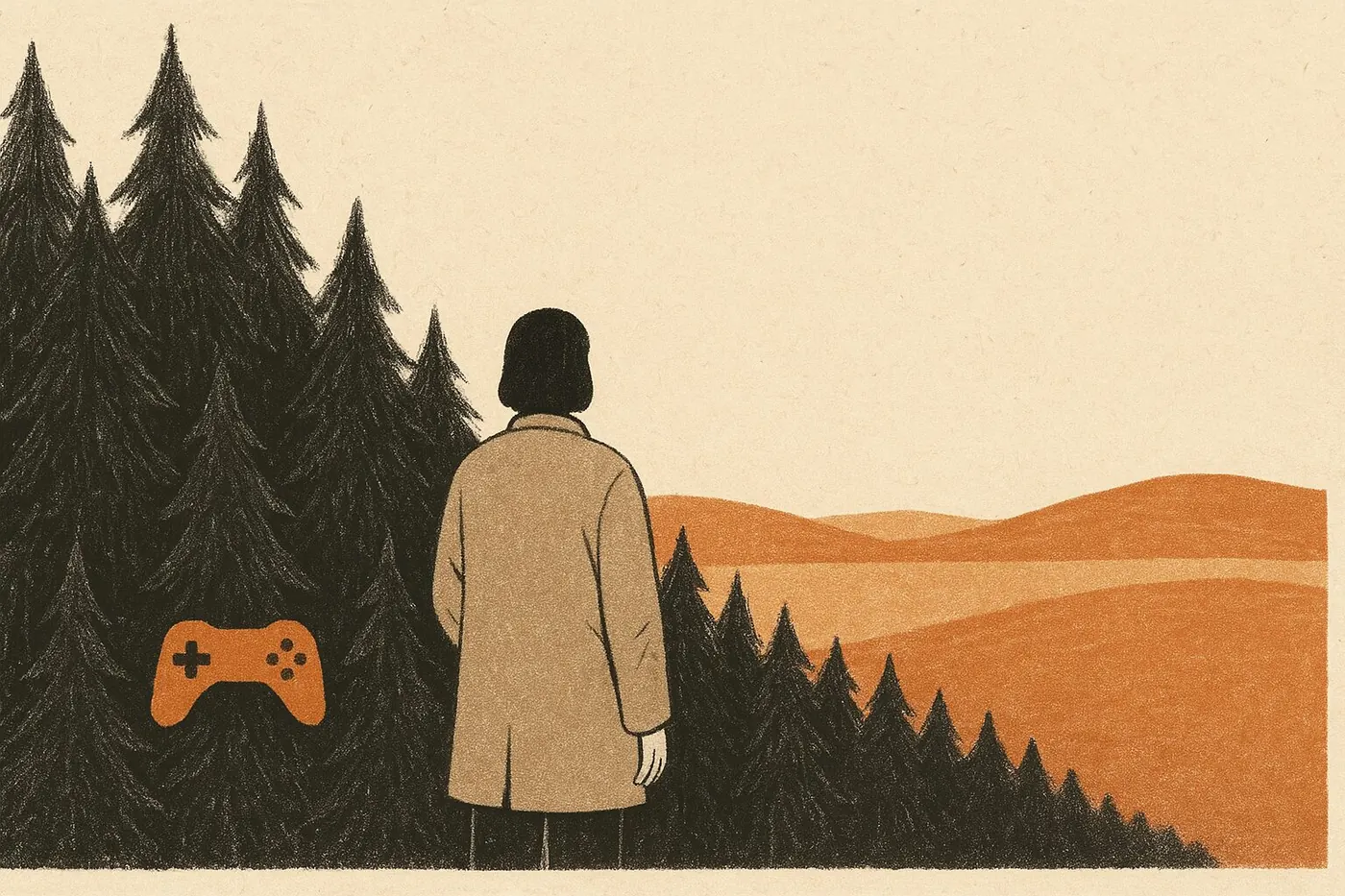
Should You Stay in Games or Leave? A Decision Framework
This is the question that keeps game developers up at night. You love making games, but the pay gap is real, the layoffs keep coming, and AI is reshaping what studios need. Passion is not a financial plan.
Here is a structured framework for making this decision clearly instead of letting anxiety make it for you.
Reasons to Stay in Games
Before you decide to leave, be honest about what the industry still offers. These are legitimate reasons to stay, not cope.
Deep niche expertise has compounding value. If you are a rendering engineer, a technical animator, or a senior systems designer, your expertise is rare and difficult to replace. Studios will always need specialists, and the supply of experienced game developers is shrinking as people leave. Scarcity drives compensation up over time for those who stay.
The work itself may be irreplaceable for you. Some people are wired to make games. If every other job feels like settling, that matters. Career satisfaction has real economic value because people who hate their jobs perform worse, earn less over time, and burn out. Do not underestimate the productivity advantage of genuinely caring about what you build.
Conditions are slowly improving. Unionization efforts are gaining ground. Some studios are meaningfully addressing crunch culture. Remote work has expanded options beyond the traditional LA/SF/Seattle hubs. The industry is not where it needs to be, but the trajectory is better than it was five years ago.
AI creates opportunities alongside threats. Generative AI for asset creation, procedural content, and testing means smaller teams can ship bigger games. If you position yourself as someone who knows both game development and AI tooling, you become more valuable, not less.
Reasons to Leave
These are the structural problems that are not going away. Be clear-eyed about them.
The pay gap is significant and persistent. Game developers earn 15-30% less than equivalently skilled engineers in other tech sectors. Over a 10-year career, that gap compounds into hundreds of thousands of dollars in lost earnings and retirement savings. At senior levels, the gap widens further because equity compensation in games is rare compared to other tech.
Crunch is structural, not cultural. Despite improvements at some studios, the fundamental economics of game development (fixed ship dates, scope uncertainty, hit-driven revenue models) create crunch incentives that company culture alone cannot eliminate. If crunch has damaged your health or relationships, that pattern is likely to repeat.
Instability is the default. Project-based employment means layoffs after every ship cycle. Studio closures happen to successful teams, not just failing ones. The emotional cost of rebuilding your career every 2-3 years is real and cumulative.
AI pressure on certain roles is accelerating. Concept art, QA, localization, level layout, and certain production roles are facing genuine displacement. If your role is primarily execution of well-defined tasks, the timeline for AI impact is shorter than you might think. Roles involving creative direction, complex system design, and cross-functional coordination are more durable.
Where Game Skills Transfer Best
If you decide to leave, these industries value what you already know:
Simulation and training. Defense contractors, medical simulation companies, and industrial training firms need real-time 3D expertise. Unity and Unreal skills transfer directly. Pay is often 30-50% higher than equivalent game roles, and the work is stable.
Spatial computing and AR/VR. Meta, Apple, and the broader XR ecosystem need people who understand real-time rendering, interaction design, and performance optimization in constrained environments. Game developers have years of relevant experience that VR-native companies are desperate for.
Film and VFX. Virtual production (LED stages, real-time rendering for film) is growing fast. Technical artists and engine developers from games are highly sought after. The pay is better, and the project timelines are more predictable.
Developer tools and platforms. Companies building game engines, creative tools, or developer platforms want people who have been users of these tools under real production pressure. Your frustrations with existing tools are a product insight advantage.
Fintech, healthtech, and enterprise software. Your C++, systems thinking, and performance optimization skills are directly applicable. These industries pay well and offer stability. The work is less exciting on the surface but often more technically challenging than people expect.
How to Test the Waters Before Committing
You do not have to make this decision all at once. Here is how to explore without burning bridges.
Step 1: Evaluate your transferable skills honestly. List every technical skill, tool, and methodology you use. Then research which non-game roles require those same skills. You will likely find more overlap than you expect. If you want help with this, take our assessment for a structured breakdown of where your skills apply outside games.
Step 2: Take one contract or side project outside games. Pick a small freelance project in an adjacent industry. A simulation prototype, a VR experience for an enterprise client, or a technical writing gig about game technology for a non-game audience. This gives you real data about whether you enjoy the work and whether companies value your background.
Step 3: Talk to people who already made the switch. Find game developers who moved to the industries listed above. Ask what surprised them, what they miss, and what they wish they had known. LinkedIn search for "former [studio name]" and filter by non-game companies. Most people are happy to talk about their experience.
Step 4: Set a decision deadline. Open-ended deliberation is the enemy of good decisions. Give yourself a specific date (60-90 days is reasonable) to make a call. Use the time between now and then to gather information through the steps above.
The Decision Criteria
Answer these five questions honestly:
- Financial: Can you afford the pay gap for the next 5 years, including the impact on savings and retirement?
- Health: Is your physical and mental health sustainable at the current pace?
- Stability: Can you handle another layoff cycle emotionally and financially?
- Growth: Are you learning and advancing, or have you plateaued?
- Identity: Can you separate your identity from "game developer" enough to be happy doing something else?
If you answered "no" to three or more of these, the decision is already made. If you answered "yes" to most, staying is a defensible choice as long as it is deliberate and not just inertia.
If You Decide to Stay: Making It Work
Staying in games is a defensible choice, but it requires strategy to avoid the worst outcomes.
Specialize strategically. Generalists are more expendable. Technical animators, rendering engineers, and senior system designers have leverage that junior gameplay programmers do not. If you are early in your career, specialize toward areas that are harder to staff.
Build financial resilience. The layoff cycle is structural. Assume you will be laid off every 2-3 years and plan accordingly. Build 6-12 months of expenses in savings. Avoid lifestyle inflation. Make sure a layoff is inconvenient, not catastrophic.
Protect your health. Set boundaries on crunch. Use your PTO. Maintain relationships and hobbies outside of work. Burnout happens slowly and then all at once. The game industry will take everything you are willing to give. Do not give everything.
Cultivate external options. Even if you never leave, having options changes your relationship to work. Maintain your portfolio, keep your network active, and stay current on what adjacent industries are doing. Knowing you can leave makes it easier to stay on your own terms.
If You Decide to Leave: Making the Transition
Leaving games is also a defensible choice, especially if the financial or health factors are unsustainable.
Lead with your skills, not your industry. "Game developer" is a label that some hiring managers view with skepticism. "Engineer with expertise in real-time systems, performance optimization, and complex interactive applications" is a value proposition. Translate your experience into terms the target industry understands.
Expect a cultural adjustment. Other industries move slower, have less passion for the product, and feel bureaucratic compared to game studios. This is also why they pay better and have better work-life balance. The tradeoff is real. Be prepared for it.
Do not burn bridges. The game industry is small. You may want to return someday. Leave on good terms, stay in touch with former colleagues, and maintain your relationships with the community.
Give yourself time to grieve. Leaving an identity is hard, even when it is the right choice. You might feel a sense of loss even as your life improves. That is normal. It does not mean you made the wrong choice.
The Bottom Line
There is no universally right answer. Some game developers should absolutely stay because their skills, passion, and financial situation make it the best choice. Others are staying out of fear, habit, or a belief that their skills will not transfer. That belief is almost always wrong.
The worst option is not deciding. Drifting through another crunch cycle while telling yourself you will figure it out later is how people end up burned out with no plan at 40. Both staying and leaving can be good choices. Defaulting to inertia while resenting your situation is not a choice. It is abdication.
Make the decision. Make it with data. Make it on your timeline, not your anxiety's. And once you have made it, commit fully. Half-measures lead to the worst outcomes in either direction.
Ready to find your pivot?
Take our 5-minute assessment and get a concrete action plan, tool recommendations, and a 30-day roadmap tailored to your exact situation.
Find Your Pivot