Designer Freelance Transition Guide for 2026
A practical guide for designers moving into freelance work in 2026, including niche selection, portfolio updates, pricing, outreach, and first clients.
Ian Cummings
2x Founder, Game Developer
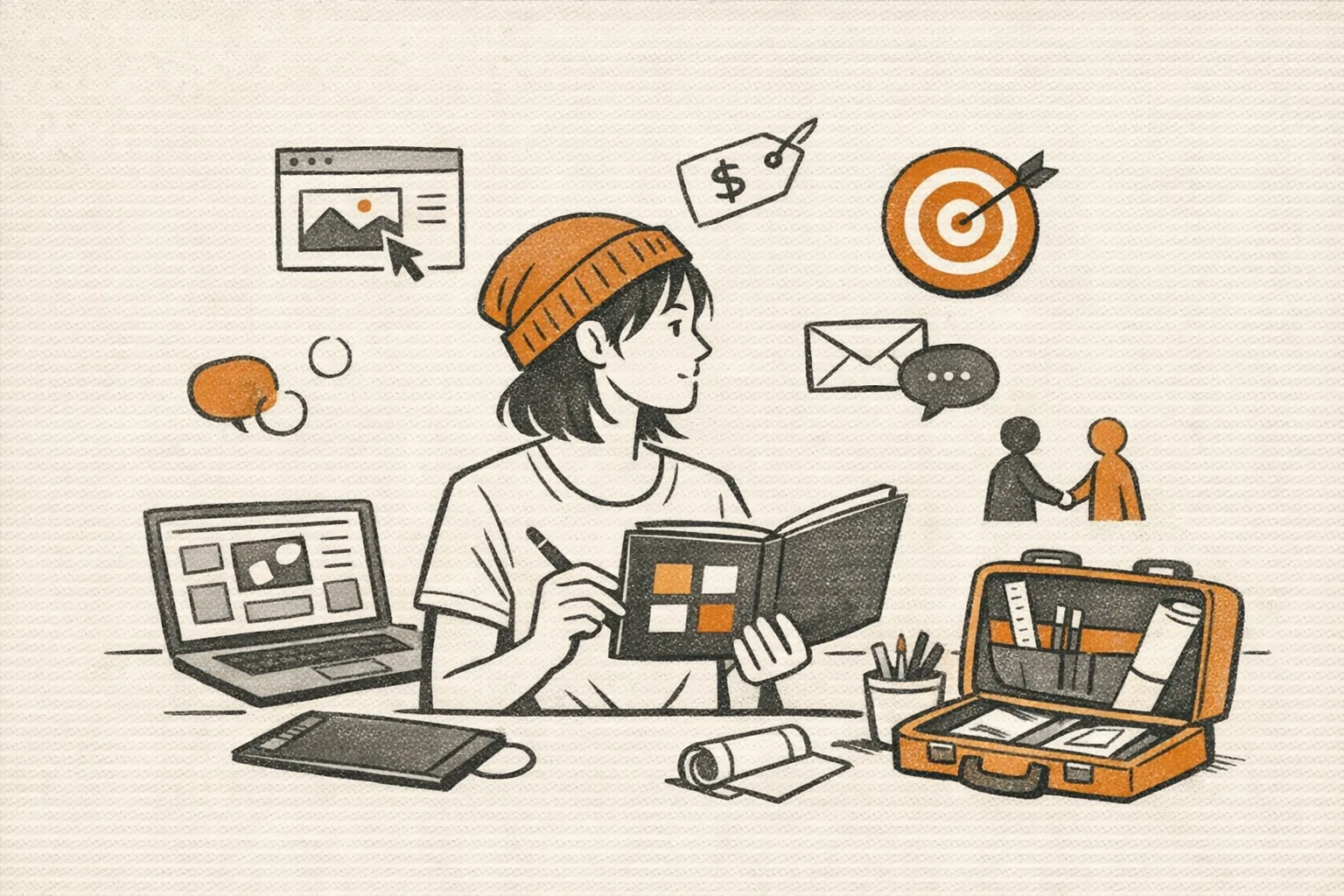
Designer freelance transition guide for 2026
If you’re a product designer, UX designer, visual designer, or brand designer thinking about going freelance, 2026 is still a workable time to make the move — but the path looks different than it did a few years ago.
Clients are more cost-conscious. Teams are smaller. More companies expect designers to work alongside AI tools instead of avoiding them. That means the strongest freelance designers are not just selling “good taste.” They’re selling speed, clarity, and business outcomes.
If you want to pivot from full-time design work into freelancing, the goal is not to quit and hope. The goal is to make yourself easy to hire for a narrow, valuable problem.
Start with a service, not a vague freelance identity
A lot of designers say they want to freelance, but their positioning is too broad:
- “I do product design”
- “I help with UX”
- “I’m a multidisciplinary designer”
That makes it hard for clients to know when to hire you.
A better approach is to define one clear offer around a problem a company already understands. For example:
- UX audit and redesign for SaaS onboarding flows
- Landing page design for B2B startups launching new AI features
- Design systems cleanup for small product teams
- Conversion-focused website redesign for agencies or consultants
- Rapid prototype design for founders validating a new product
Freelance clients usually buy outcomes, not job titles. The more specific your offer, the easier it is to get referrals and close projects.
Pick a niche based on proof you already have
You do not need a perfect niche on day one. You do need a believable one.
Look at your last 3 to 5 projects and ask:
- What kind of company did I help?
- What kind of design problem kept showing up?
- What result did my work improve?
- Which projects would I be happy to repeat?
If you’ve worked on onboarding, retention, ecommerce flows, internal tools, or marketing sites, that history can become your first freelance niche.
The easiest freelance pivot is usually adjacent to work you’ve already done in-house.
Build a portfolio for buyers, not recruiters
A freelance portfolio should feel different from a portfolio built for full-time design interviews.
When a hiring manager reviews a full-time portfolio, they may care about process depth, collaboration, and craft. When a freelance buyer reviews your site, they want fast answers to simpler questions:
- Can this person solve my problem?
- Have they done something similar before?
- Do they seem easy to work with?
- What happens if I contact them?
Your portfolio should make those answers obvious.
Include:
- A short headline explaining who you help and how
- 2 to 4 strong case studies tied to business outcomes
- A simple services section
- A clear contact path
- Testimonials or credibility markers if you have them
If you need help tightening your case studies, our post on AI design portfolio interview tips is also useful for freelance positioning because it pushes you to show decisions, constraints, and results instead of just polished screens.
Your first freelance portfolio does not need many projects
Many designers delay freelancing because they think they need a huge body of client work first.
You don’t.
You need enough evidence to reduce risk for the next client.
That can come from:
- Full-time work you’re allowed to show
- Contract work from the past
- Volunteer or nonprofit projects
- Self-initiated redesigns with a clear business rationale
- A focused sample project for a niche you want to enter
What matters most is whether the work supports the service you’re selling.
Learn to package your work
Freelance transitions get easier when you stop selling open-ended availability.
Instead of saying, “I can help with design,” package your work into offers such as:
- 2-week UX audit
- 1-week landing page sprint
- 3-week prototype package for founder demos
- Monthly design support retainer
Packaging helps in three ways:
- It gives clients a simpler buying decision.
- It makes pricing less awkward.
- It forces you to define scope before the project starts.
This is especially important in 2026, when many companies want short, low-risk engagements before committing to larger retainers.
Price around scope and value, not your old salary
A common mistake is converting your salary into an hourly freelance rate and calling it done.
That’s a weak starting point because freelance pricing has to cover:
- Non-billable admin time
- Sales and outreach
- Taxes
- Gaps between projects
- Revisions and communication
- Software and business expenses
You do not need a perfect pricing model immediately, but you should avoid underpricing just to get momentum.
A practical starting point is to define:
- A minimum project size you’ll accept
- A standard package price for your most common offer
- A retainer price for ongoing support
Then refine based on demand and delivery effort.
Use AI as part of your workflow, not your whole pitch
Some clients now expect designers to move faster with AI-assisted research, wireframing, content exploration, or asset generation. That can help your freelance business, but it should not become your only differentiator.
Clients rarely hire a freelancer just because they use AI tools. They hire because the freelancer can:
- clarify the problem
- make better product or marketing decisions
- ship usable work quickly
- collaborate with stakeholders
AI can support your process, but your pitch should still center on outcomes.
If you want to explore where AI-adjacent demand is growing for designers, read AI jobs for designers. It’s a useful map of where design skills are becoming more valuable, especially if you want freelance work near product, growth, or creative tooling teams.
Get your first clients from warm channels first
Cold outreach can work, but it is usually not the fastest path to your first freelance revenue.
Start with warm channels:
- former coworkers
- founders in your network
- agency contacts
- startup operators you already know
- past clients
- design communities where people know your work
Your first message does not need to be elaborate. It just needs to be specific.
For example:
- what you’re offering
- who it’s for
- what kind of project you want
- a link to your portfolio
You are not announcing that you are “open to freelance.” You are telling people what problem you can solve now.
Expect sales to be part of the job
The hardest part of freelancing for many designers is not the design work. It’s the repeated cycle of:
- finding leads
- qualifying opportunities
- writing proposals
- following up
- handling scope questions
- asking for the close
That does not mean freelancing is a bad fit. It means freelancing is partly a sales role.
If that sounds draining, consider a hybrid transition:
- keep your full-time role while testing a small freelance offer
- take one contract project before going fully independent
- target part-time consulting instead of full-time freelancing
A gradual pivot is still a real pivot.
Watch for the most common freelance transition mistakes
Designers moving into freelance work often run into the same issues:
- positioning too broadly
- showing pretty work without business context
- taking under-scoped projects
- pricing too low
- relying only on inbound leads
- saying yes to every kind of client
You do not need to avoid every mistake. You do need to notice them early and adjust.
A simple 30-day freelance transition plan
If you want a practical starting point, use this:
Week 1
- Choose one service offer
- Pick one target client type
- Rewrite your homepage headline and intro
Week 2
- Publish or refresh 2 case studies
- Add a services section
- Create a simple contact flow
Week 3
- Write a short outreach message
- Contact 10 warm leads
- Ask 3 trusted people for feedback on your positioning
Week 4
- Run 3 to 5 sales conversations
- Refine your offer based on objections
- Set a minimum project price and scope boundary
That is enough to test whether freelance demand exists for your current skill set.
Freelancing is one designer pivot, not the only one
Freelancing can give you more control, more variety, and a faster path to independent income. But it is not the only strong next step for designers.
Depending on your goals, you may also want to explore:
- AI-adjacent product roles
- design operations
- UX research-adjacent work
- growth design
- creative strategy
- adjacent roles in startups or agencies
If you’re still comparing paths, the broader designers pivot guide can help you evaluate which direction fits your skills, risk tolerance, and career goals.
Final takeaway
The best freelance transition for designers is usually not a dramatic leap. It is a focused repositioning.
Pick a narrow problem. Show proof. Package the work. Talk to real buyers. Then improve from actual conversations instead of waiting for perfect confidence.
That approach is less glamorous than “going freelance” overnight, but it is much more likely to work.
Ready to find your pivot?
Take our 5-minute assessment and get a concrete action plan, tool recommendations, and a 30-day roadmap tailored to your exact situation.
Find Your Pivot