Freelance Transition for Designers: A Practical Guide
Learn how graphic, brand, and product designers can move from in-house roles to freelance work with better positioning, portfolios, pricing, and outreach.
Ian Cummings
2x Founder, Game Developer
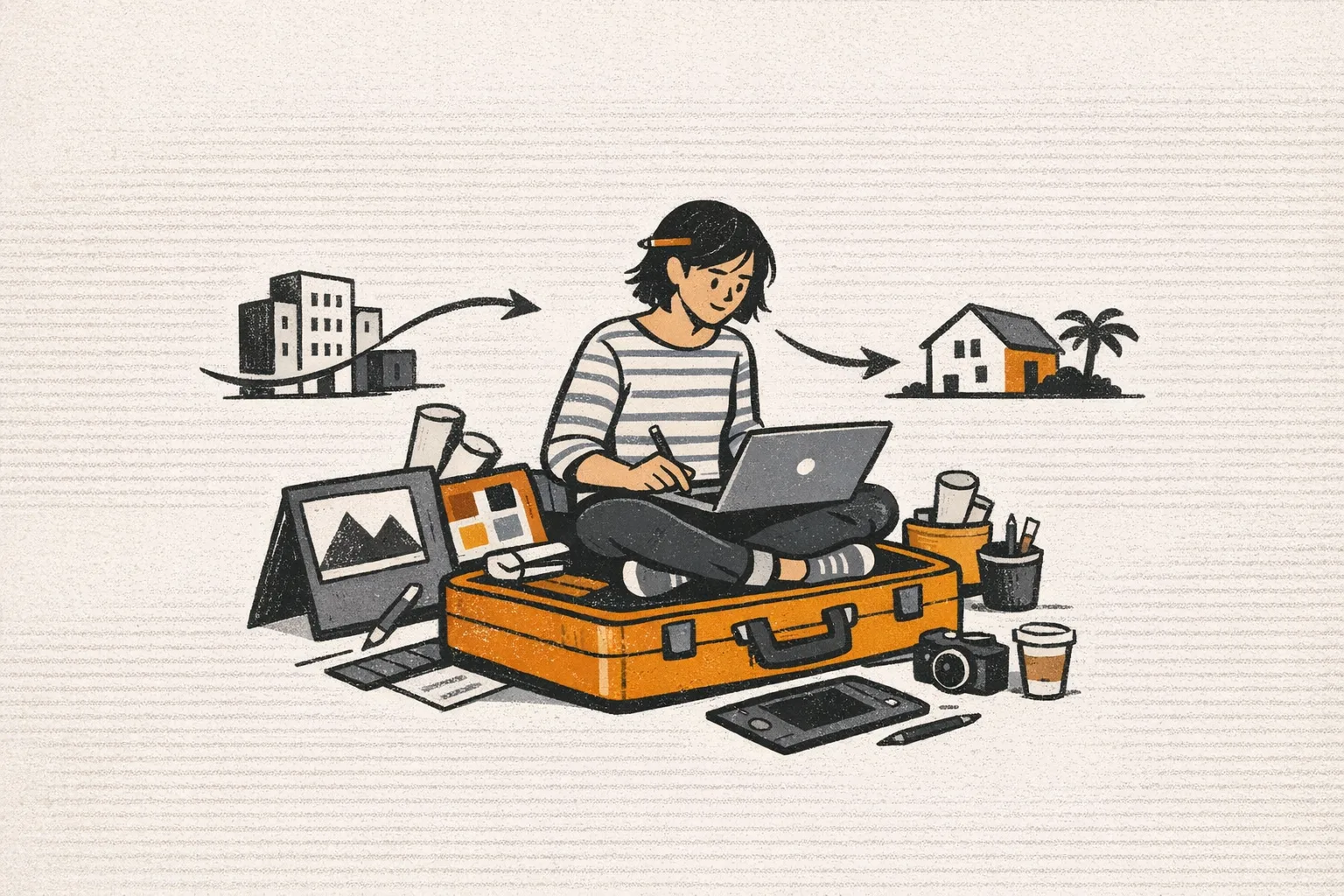
Freelance Transition for Designers: How to Move From In-House to Independent Work
A lot of designers think freelancing is a total career reset. It usually is not.
If you already work in graphic design, brand design, product design, marketing design, or UI work, you likely have more transferable proof than you think. The hard part is not “becoming a freelancer.” The hard part is packaging your existing skills in a way that makes clients feel low risk.
This guide is for designers who want to move from salaried or agency work into freelance work without starting from zero.
Who this path fits best
A freelance transition tends to fit designers who already have at least one of these:
- a portfolio with real business outcomes
- experience working with stakeholders or clients
- strength in one clear area like brand systems, landing pages, lifecycle design, ad creative, or product UI
- decent communication and project management habits
- a desire for more control over schedule, clients, or income mix
It is usually a better fit if you want autonomy more than prestige. Freelance work can be rewarding, but it also means handling sales, scope, and uncertainty.
The biggest mistake designers make when trying to freelance
Most designers position themselves too broadly.
“Freelance designer” is technically true, but it is weak positioning. Clients usually hire for a narrower problem:
- “We need a landing page designer who can improve conversion.”
- “We need a brand designer for a B2B SaaS rebrand.”
- “We need ongoing creative for paid social.”
- “We need a product designer to clean up onboarding flows.”
The more clearly you connect your work to a business problem, the easier the transition gets.
Pick a service, not just an identity
Before you update your portfolio or LinkedIn, define the service you want to sell.
Good examples:
- brand identity for early-stage startups
- conversion-focused landing page design
- product design for SaaS onboarding and activation
- ad creative systems for ecommerce brands
- email and lifecycle design for subscription businesses
- presentation and sales collateral design for B2B teams
This does not lock you in forever. It just gives prospects a reason to remember you.
A simple test: if someone asks what you do, can you answer in one sentence without listing ten different skills?
Start with the work you already have
You do not need a brand-new freelance portfolio before you begin.
Instead, audit your existing work and sort it into three buckets:
- work that matches the service you want to sell
- work that shows process, communication, or measurable outcomes
- work that is decent visually but attracts the wrong type of client
Lead with bucket one.
If you have mostly in-house or agency work, rewrite the case studies around the client problem, your role, constraints, and result. Even if you cannot share every detail, you can usually explain:
- what the business needed
- what you designed
- how you made decisions
- what changed after launch
That is more persuasive than a gallery of polished screens with no context.
What clients actually want to see in a freelance portfolio
A freelance portfolio should reduce perceived risk.
Clients are not only judging taste. They are asking:
- Can this person solve my kind of problem?
- Can they communicate clearly?
- Can they work with feedback and ambiguity?
- Can they finish the job without a lot of hand-holding?
Your portfolio should make those answers obvious.
Useful portfolio ingredients:
- a clear headline saying who you help and how
- 2 to 4 strong case studies, not 12 mixed-quality projects
- short explanations of scope, timeline, and outcomes
- examples that match the kind of client you want next
- a simple contact path
If your portfolio is weak, focus on relevance before volume. One strong case study in the right niche beats several generic projects.
Repackage your experience for buyers, not recruiters
A lot of designers are used to presenting themselves for hiring managers. Freelance buyers think differently.
Recruiters may care about:
- years of experience
- company logos
- tool familiarity
- title progression
Clients care more about:
- whether you understand their problem
- whether your process feels reliable
- whether your work will help them make money, save time, or look more credible
That means your messaging should shift from resume language to outcome language.
Instead of:
- “5 years of experience across digital and print”
Try:
- “I help B2B startups turn rough positioning into clear landing pages and sales visuals.”
How to get your first freelance clients without pretending to be an influencer
You do not need a huge audience to start.
Most designers get early freelance work from warm or adjacent networks:
- former coworkers
- startup founders you already know
- marketers or developers who need a design partner
- agencies that need overflow help
- past clients from contract or in-house roles
A practical first move is to make a short list of 20 to 30 people who already know your work. Then send a simple note:
- what kind of work you are taking on
- who you are best suited to help
- one or two examples of relevant work
- an easy way to reply
This works better than a vague “I’m available for freelance” post.
Outreach that feels specific instead of spammy
Cold outreach can work if it is targeted.
Bad outreach says:
- “Hi, I’m a passionate designer available for all your design needs.”
Better outreach says:
- “I noticed your homepage and paid ads use different visual language. I help teams tighten that handoff so campaigns convert better after the click.”
The goal is not to write a long pitch. The goal is to show that you understand a concrete problem.
If you want to freelance in a niche, build a small list of companies in that niche and look for repeated design issues you know how to solve.
Pricing: do not start by undercharging on purpose
Many designers assume low prices help them get traction. Sometimes they do the opposite.
Very low pricing can signal inexperience, attract difficult clients, and make it hard to deliver thoughtful work profitably.
A better approach is to price around a defined scope.
For example, instead of offering “design help,” package offers like:
- landing page redesign
- startup brand kit
- monthly ad creative support
- onboarding UX audit plus revised screens
Clear scope makes pricing easier because clients understand what they are buying.
Keep one foot on stable ground during the transition
The safest freelance transition is often gradual.
You do not have to quit immediately. Many designers test the path by:
- taking one or two clients while employed
- freelancing between full-time roles
- using contract work as a bridge
- partnering with agencies before sourcing direct clients
This gives you time to learn sales, scoping, invoicing, and client communication without making income volatility your first problem.
Skills that matter more in freelance than in-house
Strong design craft still matters, but freelance success also depends on adjacent skills:
- writing clear proposals
- setting scope boundaries
- running kickoff calls
- managing revisions
- following up consistently
- spotting bad-fit clients early
Designers who can communicate clearly often outperform designers who are slightly stronger visually but unreliable operationally.
Signs you may be better suited to adjacent roles instead
Freelancing is not the only pivot available to designers.
If you like strategy, systems, or cross-functional work more than client acquisition, you may also want to explore adjacent paths. Our guide to AI jobs for designers covers one set of options, and the designers pivot page can help you think through broader next steps.
That matters because some designers are not actually trying to freelance. They are trying to escape a bad role. Those are different problems.
A simple 30-day plan to test the freelance path
If you want to explore freelancing without overcomplicating it, try this:
Week 1
- choose one service to lead with
- rewrite your headline and intro copy
- pick 2 to 4 relevant projects
Week 2
- turn those projects into clearer case studies
- create one short offer description
- make your contact path obvious
Week 3
- reach out to 10 warm contacts
- identify 20 target companies or agencies
- send a few tailored messages
Week 4
- refine your pitch based on replies
- tighten scope and pricing language
- decide whether to keep testing, go part-time, or pursue contract work first
The point is not to build a perfect freelance brand in a month. The point is to get signal from the market.
Final thought
A freelance transition for designers works best when you stop thinking of it as a leap into the unknown.
In most cases, it is a repositioning exercise. You already have skills. You already have proof. You may even already know people who could hire you or refer you.
What changes is how clearly you define the problem you solve, how confidently you present your work, and how intentionally you go after the right clients.
That is what turns freelance from a vague backup plan into a real career option.
Ready to find your pivot?
Take our 5-minute assessment and get a concrete action plan, tool recommendations, and a 30-day roadmap tailored to your exact situation.
Find Your Pivot