Designer Adjacent Industries Career Pivot Guide for 2026
A practical guide for designers exploring adjacent industries, transferable skills, portfolio updates, and credible career pivot paths in 2026.
Ian Cummings
2x Founder, Game Developer
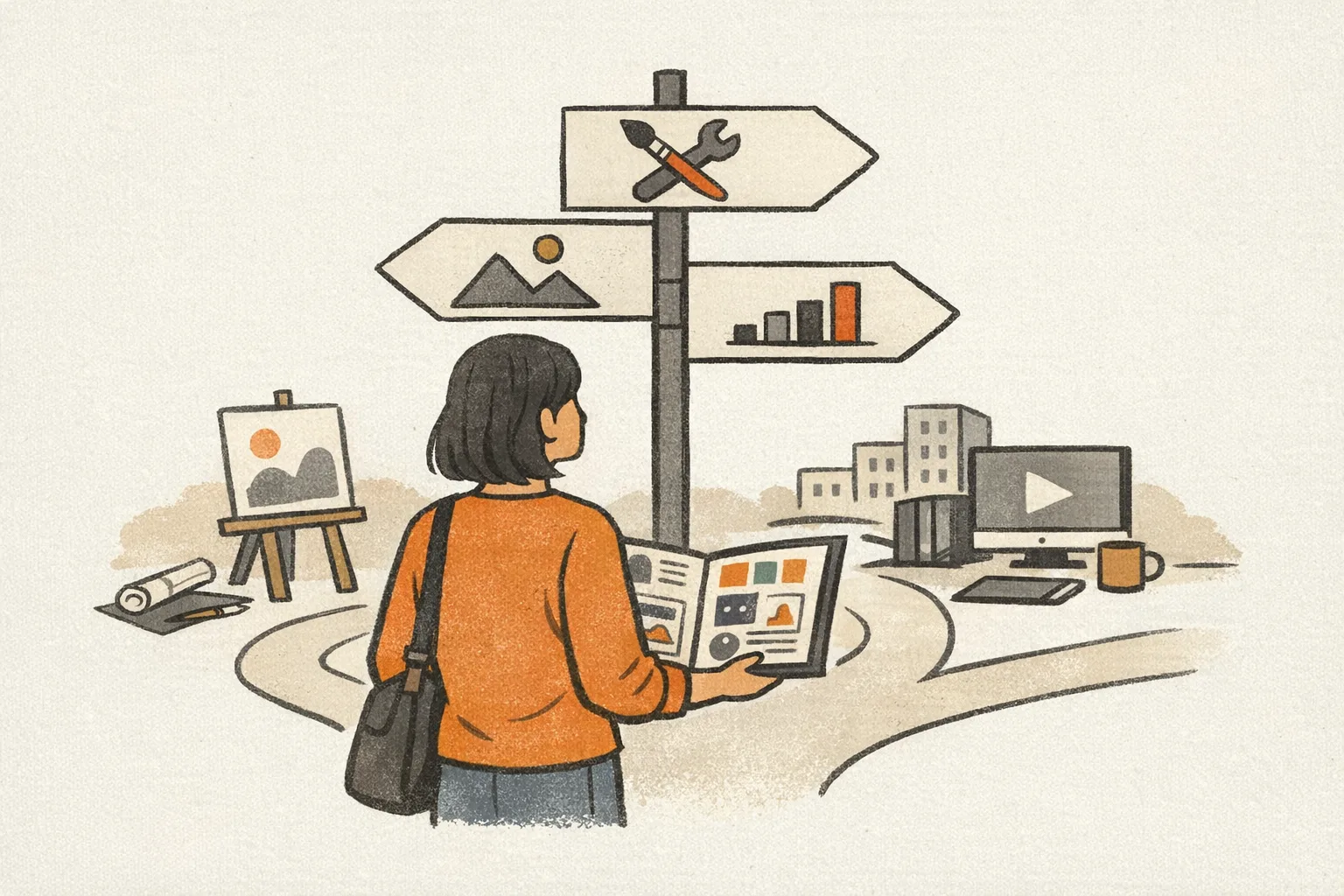
Designer adjacent industries career pivot guide for 2026
If you are a designer who wants a career change without starting over, adjacent industries are usually the best place to look first. You keep more of your existing strengths, shorten the learning curve, and make your story easier to explain in interviews.
That matters because most designers do not need a total reinvention. They need a practical pivot into work that still values visual thinking, communication, systems, research, and taste.
If you are still early in the process, start with the broader designers pivot guide or explore the role-specific overview at /for/designers.
What counts as an adjacent industry for designers
An adjacent industry is close enough to your current work that employers can understand the move.
For designers, that usually means industries or functions where these skills still matter:
- visual communication
- brand and storytelling
- user empathy
- layout and information hierarchy
- stakeholder collaboration
- critique and iteration
- presenting ideas clearly
The best adjacent move is not always another job with "designer" in the title. Sometimes it is a role where design experience gives you an edge over other candidates.
Why adjacent pivots are often easier than total career changes
A lot of career advice pushes dramatic reinvention. In practice, adjacent pivots are often more realistic because they let you reuse proof you already have.
You may already have:
- portfolio samples that show business impact
- experience working with product, marketing, sales, or engineering
- examples of research, testing, or client communication
- a track record of shipping work under deadlines
That makes it easier to answer the question every hiring manager asks: why you?
If your current goal is income flexibility rather than a full role change, our post on freelance transition for designers may be a better fit.
Best adjacent industries for designers
These are some of the strongest adjacent paths for designers in 2026, especially if you want a move that feels credible and marketable.
1. Marketing and brand strategy
Designers who have worked on campaigns, landing pages, social assets, or brand systems often transition well into marketing roles.
Common target roles include:
- brand strategist
- creative strategist
- content designer
- marketing designer with broader ownership
- campaign manager
Why this works:
- you already understand audience, messaging, and conversion
- you can speak both visual and business language
- many teams value people who can connect creative execution to outcomes
What to emphasize in your story:
- campaign goals
- collaboration with copywriters or marketers
- performance improvements
- brand consistency across channels
2. Product and UX operations
Some designers are less interested in making screens and more interested in improving how work gets done. That can make operations a strong adjacent move.
Relevant roles include:
- design operations
- UX operations
- program manager for design or product teams
- workflow or systems coordinator
Why this works:
- designers often build process informally already
- you understand handoffs, feedback loops, and tooling pain points
- operations roles reward organization, communication, and systems thinking
This path is especially useful for designers who enjoy structure more than constant production work.
3. User research and customer insights
If your favorite part of design work is understanding people, research can be a natural next step.
Potential roles include:
- UX researcher
- research coordinator
- customer insights analyst
- qualitative research specialist
Why this works:
- many designers already run interviews, usability tests, or discovery sessions
- synthesis and pattern recognition transfer well
- presenting findings is already familiar territory
What helps:
- showing examples of research plans or interview guides
- documenting how insights changed a product or campaign
- learning basic research operations and analysis methods
4. Content design and information architecture
Designers who care deeply about clarity, structure, and user flow often do well in content-focused roles.
Examples include:
- content designer
- information architect
- UX writer with strong systems thinking
- knowledge base or help center strategist
Why this works:
- hierarchy and clarity are already core design skills
- many designers are better at structuring information than they realize
- teams increasingly need people who can reduce confusion across product experiences
This path can be especially strong for designers who enjoy simplifying complexity.
5. Sales enablement and solutions consulting
This one is less obvious, but it can be a strong move for designers who are client-facing, persuasive, and comfortable presenting work.
Possible roles include:
- solutions consultant
- sales enablement specialist
- pre-sales consultant
- customer education lead
Why this works:
- designers often explain tradeoffs to non-design stakeholders
- presentation skills transfer directly
- visual communication can be a major advantage in demos and client conversations
If you have worked in agencies or freelance settings, this path may be more realistic than you think.
6. Learning, training, and education roles
Designers who like teaching, onboarding, or explaining tools can pivot into education-related work.
Examples include:
- instructional designer
- learning experience designer
- training specialist
- curriculum designer
Why this works:
- design already involves sequencing information for understanding
- visual clarity helps in educational materials
- many companies need internal training that is actually usable
This path is a good fit if you enjoy helping others build confidence.
How to choose the right adjacent path
Do not pick based only on what sounds interesting. Pick based on overlap.
A good adjacent pivot usually has three things:
- skill overlap with your current work
- evidence you can already show
- real demand in the market you want to enter
Ask yourself:
- Which parts of my current work energize me most?
- Which tasks do people already trust me with?
- Which outcomes can I prove with examples?
- Which target roles would make sense to a hiring manager in one sentence?
If the move takes five minutes to explain, it is probably too far away. If it makes immediate sense, you are closer than you think.
How to reposition your portfolio for an adjacent industry
Your portfolio does not need to show that you have already done the exact target job. It needs to show that you can solve similar problems.
For adjacent pivots, update your portfolio around these ideas:
Lead with transferable outcomes
Do not just show polished visuals. Show what changed because of your work.
Examples:
- improved onboarding clarity
- reduced support confusion
- increased campaign consistency
- sped up collaboration across teams
- uncovered user pain points through research
Rename projects around business problems
A case study called "Mobile App Redesign" is weaker than one called "Improving activation for first-time users."
Adjacent hiring managers care about the problem, not just the artifact.
Add context about collaboration
If you want to move into strategy, research, operations, or enablement, explain:
- who you worked with
- what decisions you influenced
- how you handled ambiguity
- what constraints shaped the outcome
That context often matters more than the final mockup.
For more help on positioning your work, see AI design portfolio interview tips.
How to explain your pivot in interviews
Your interview story should sound deliberate, not reactive.
A simple structure works well:
- what you have been doing
- what you discovered you are best at
- why the target role is a logical next step
- how your past work prepares you for it
Example:
"I have spent the last few years in design roles focused on translating complex ideas into clear experiences. Over time, I realized the part I enjoy most is research synthesis and shaping decisions upstream. That is why I am targeting user research roles now. I already have experience running interviews, identifying patterns, and turning findings into product changes, so this feels like a focused extension of the work I have been doing rather than a complete reset."
That kind of answer makes the pivot feel credible.
Mistakes designers make when pivoting to adjacent industries
A few common mistakes slow people down:
- applying too broadly without a clear target
- underselling transferable skills because the title is different
- keeping a portfolio focused only on visuals
- telling a vague story about wanting "something new"
- chasing trends instead of fit
The goal is not to look like a perfect match on paper. The goal is to make the match easy to understand.
A practical 30-day plan for a designer pivot
If you want to move soon, keep the process simple.
Week 1
- choose one adjacent path, not five
- collect 3 to 5 past projects that support that move
- rewrite your resume summary around the target role
Week 2
- update portfolio case studies with stronger problem framing
- rewrite LinkedIn headline and about section
- make a list of 20 target companies or teams
Week 3
- practice a short pivot story for networking and interviews
- reach out to people already in the target role
- apply to a focused set of roles with tailored materials
Week 4
- review which applications got traction
- refine your story based on recruiter or hiring manager feedback
- double down on the adjacent path with the strongest response
Small, focused iteration usually beats a massive rebrand.
Final thoughts
The best career pivot for a designer is often not a leap into a completely different field. It is a move into an adjacent industry where your existing strengths become newly valuable.
That is good news, because it means you may be closer than you think.
Start with the overlap. Build a clear story. Show proof that travels. Then target roles where your design background is an advantage, not a detour.
If you want a broader starting point before choosing a path, read the designers pivot guide and browse /for/designers.
Ready to find your pivot?
Take our 5-minute assessment and get a concrete action plan, tool recommendations, and a 30-day roadmap tailored to your exact situation.
Find Your Pivot